
Yes, reselling is profitable for sellers who source strategically, understand marketplace fees, and consistently sell inventory for more than their total costs. However, making sales doesn't necessarily mean making money…
Understanding your profit margins, expenses, and taxes is essential to building a profitable resale business. 💰
Main Takeaways
- Reselling is profitable in 2026, but success depends on sourcing costs, marketplace fees, pricing, and consistent sales.
- The secondhand market continues to grow. The global secondhand apparel market is projected to reach $393 billion by 2030 according to ThredUp.
- Marketplace fees impact profitability. Selling fees, shipping expenses, packaging, and inventory costs all reduce your earnings.
- Profit margins matter more than sales revenue. A reseller generating thousands in sales isn't necessarily earning thousands in profit.
- Reselling income may be taxable, even if you don't receive a Form 1099-K. Keeping accurate records is essential.
- Vendoo helps resellers maximize profitability with Profit Tracking, Business Analytics, crosslisting, and automated inventory management.
Is Reselling Profitable? The Short Answer
Yes! Reselling is profitable for sellers who buy inventory at the right price, understand their expenses, and consistently make sales.
There is significant demand for secondhand merchandise, particularly clothing and accessories. According to the ThredUp Resale Report, the global secondhand apparel market is projected to reach $393 billion by 2030, growing twice as fast as the overall apparel market.
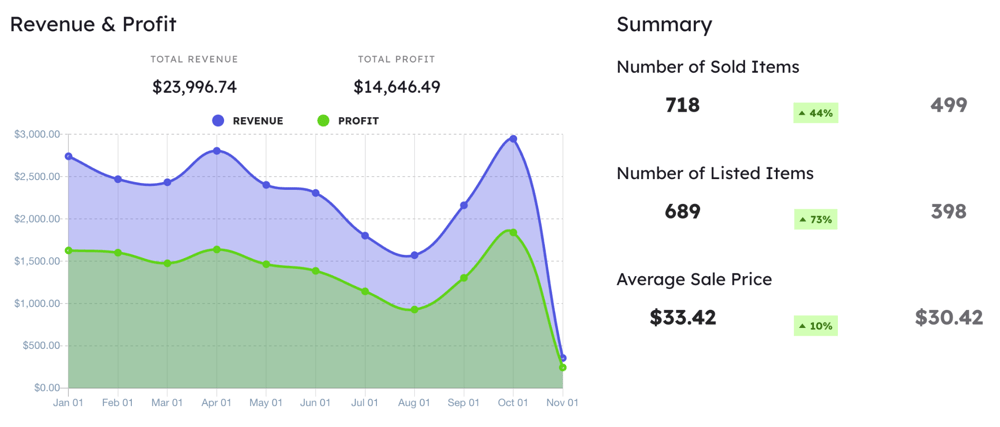
The profits speak for themselves! Take a look at this seller’s 2026 year-to-date stats from Vendoo 👀
What Eats Into Your Reselling Profit
Your reselling profit is what remains after subtracting the expenses associated with selling your inventory. Understanding these costs is essential because even high sales volume can produce disappointing profits when expenses aren't managed.
Here are the primary expenses resellers should consider:
- Marketplace fees: Most resale platforms charge fees when an item sells. Seller fees are generally a portion of the sale price. Some also charge listing fees, payment processing fees, or other expenses that affect your payout.
These are standard fees and may not include additional charges, promotional fees, or variations in how platforms calculate fees. For other platforms, including Poshmark, use the Vendoo Marketplace Fee Calculator to estimate selling expenses.
- Cost of goods (COG): Your cost of goods is the amount you spend acquiring inventory.
- Shipping and packaging: Shipping labels, boxes, mailers, tape, tissue paper, and other packaging supplies cost money. If you offer free shipping, the shipping expense comes directly out of your earnings. Even inexpensive supplies add up across hundreds of orders.
- Supplies and services: Additional costs might include equipment, mileage, photo-editing software, crosslisting apps, laundry detergent, utilities, bookkeeping services, marketing and promotional costs, etc. These things can add up!
- Your time: Sourcing, cleaning, photographing, measuring, listing, communicating with buyers, and shipping orders all require time. An item generating $20 in profit isn't particularly impressive if you spent two hours working on it. Consider your effective hourly earnings alongside your profit per item.

How to Calculate Your Reselling Profit
To calculate your reselling profit on a sale:
Start with your sale price, subtract your cost of goods, subtract your marketplace fees, and subtract seller-paid shipping.
Let's use these leggings that sold on Poshmark as an example.

COG: I purchased these leggings for $25.
Sale Price: They sold for $100 on Poshmark.
Marketplace Fees: Poshmark’s seller fee was $20 (10% of the sale price.
Shipping Cost: None to me, the seller (buyer paid shipping).
So, to calculate profit:
Sale Price ($100) minus COG ($25) minus Marketplace Fees ($20) equals Profit ($55)
Profit: $55
Don’t forget additional expenses. While the profit of this item is clear, there are routine expenses such as shipping supplies, software, and mileage to consider.
At the end of each month (or quarter), be sure to deduct all other costs against cumulative profit from all sales to ascertain true profitability.
💡Tip: It's important to distinguish profit margin from return on investment (ROI). Profit margin measures how much of your sale price remains as profit, while ROI compares your profit to the amount invested.
Is Reselling Worth It?
Reselling is worth it if you enjoy sourcing merchandise, can dedicate time to listing consistently, and are willing to track your expenses and earnings.
However, reselling isn't passive income. It requires ongoing work, and inventory doesn't always sell quickly.
Reselling might be worth it if:
- You enjoy shopping secondhand and researching resale value.
- You can consistently dedicate time to sourcing, photographing, listing, and shipping.
- You understand marketplace fees and can identify profitable inventory.
- You’re comfortable managing inventory and tracking financial performance.
- You’re willing to adjust your strategy based on sales data.
- You’re organized and self-motivated.
Reselling might not be worth it if:
- You don’t have time to manage listings and fulfill orders.
- You frequently purchase inventory without researching sold prices.
- You expect every item to sell immediately.
- You struggle to separate revenue from actual profit.
- Your inventory costs and business expenses consistently exceed your earnings.
Want to save time and maximize profit reselling?
Ways to Increase Your Reselling Profit
Improving profitability doesn’t necessarily require selling more items. Sometimes, it means selling better items, or making smarter decisions with your existing inventory. Here are some tips:
- Source smarter. Research brands, styles, demand, and comparable sold prices before purchasing inventory. A low purchase price doesn’t automatically make something a good investment.
- Price based on sold listings. Active listing prices show what sellers are asking. Sold listings provide a better indication of what buyers are actually paying.
- List on multiple marketplaces. Crosslisting exposes your inventory to different audiences and increases opportunities to make sales without purchasing additional merchandise.
- Keep listings fresh. Review stale inventory, update pricing, improve descriptions, and relist older merchandise when appropriate.
- Know your numbers. Track average sale price, cost of goods, fees, and profit margins to identify which products generate the strongest returns.
💡Tip: Did you know that Vendoo tracks reseller revenue, profit, sales, top-selling brands, best categories, COGs, shipping costs, and more?
Reselling Taxes: Hobby vs. Business
You must report all income, even if that income isn’t necessarily profit. Reselling income may be taxable regardless of whether you consider yourself a casual seller, hobbyist, or business owner.
Understanding the distinction between hobby income and business income is important because the IRS treats them differently.
Hobby or Reselling Business?
According to the Taxpayer Advocate Service, the IRS considers several factors when determining whether an activity constitutes a business, including:
- Whether you operate with the intention of making a profit.
- Whether you maintain accurate financial records.
- How much time and effort you devote to the activity.
- Whether you’ve generated profits in previous years.
- Whether you conduct the activity in a businesslike manner.
No single factor automatically determines your classification. A reseller can operate a business without forming an LLC or selling full-time.
💡Tip: Don’t just take it from us, speak to a licensed tax specialist in your state.
Form 1099-K and Reselling Income
For federal reporting purposes, online marketplaces generally must issue Form 1099-K when payments exceed the annual threshold (currently $20,000) and/or involve more than 200 transactions during the calendar year.
However, the Form 1099-K threshold is a reporting requirement, not a tax-free income allowance.
You are likely required to report taxable reselling income even if you never receive a Form 1099-K.
💡Tip: Learn more directly from the IRS guidance on Form 1099-K.
Keep Accurate Records
Resellers should maintain records of inventory purchases, sales, marketplace fees, shipping expenses, refunds, and any other business costs.
Accurate bookkeeping makes it easier to calculate profits, prepare tax returns, and substantiate business expenses.
For more information, Check out our Bookkeeping for Resellers guide.
Remember, tax obligations depend on your individual circumstances, so consult a qualified tax professional for advice about reporting income, deductible expenses, and business classification.
Track Your Reselling Profit With Vendoo
Vendoo helps resellers determine whether their business is actually profitable by tracking financial performance, managing inventory, and saving time on repetitive tasks.
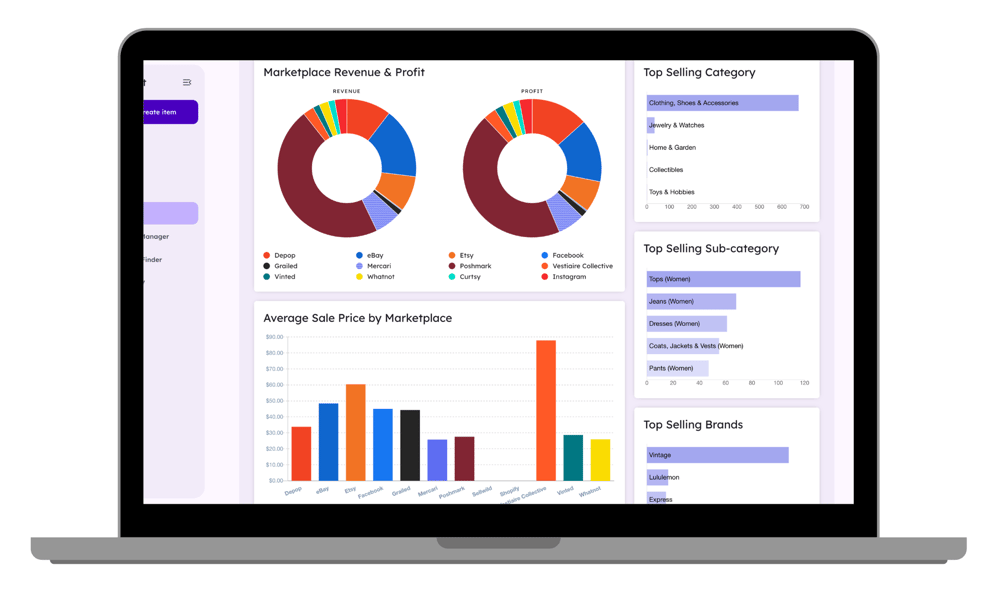
Sales notifications are exciting, but they don't tell you how much money you're keeping. Understanding your numbers is essential to growing a sustainable resale business.
Here's how Vendoo helps:
- See Your Real Profit: Vendoo’s Profit Tracking and Business Analytics features help sellers monitor financial performance, including purchase costs, sales, and marketplace fees, to better understand their actual earnings.
- Sell Faster on More Marketplaces: Vendoo supports crosslisting to 10+ marketplaces, helping sellers reach more potential buyers and increase sales opportunities without manually creating listings on each platform.
- Prevent Double Sales: Vendoo’s Sale Detection and Auto Delist features automatically identify sold items and remove corresponding listings from other connected marketplaces, preventing double sales and saving time.
- Save Time Managing Inventory: Manage listings, update inventory, and streamline repetitive tasks across multiple marketplaces from one centralized dashboard.
- Track Business Data: Track COG, sale prices, marketplace fees, shipping costs, and more. Powerful business analytics help to scale profits.
- Affordable Plans for Resellers: Vendoo plans start at $12.49 per month when billed annually, with a 14-day free trial.
The Bottom Line: Is Reselling Profitable in 2026?
Reselling is profitable in 2026 when sellers understand their costs, source strategically, and consistently make sales. However, revenue alone doesn't determine success.
Tracking your profit margins, marketplace fees, expenses, and time helps you determine whether reselling is worth it for your business. With the right strategy and tools like Vendoo, resellers can make smarter decisions and maximize their earnings.
Reselling Profit FAQs
1. Is reselling worth it in 2026?
Yes! Reselling is profitable for sellers who source desirable inventory, understand marketplace fees, and consistently make sales. The secondhand market continues to grow.
2. How much do resellers make?
Reseller earnings vary significantly based on inventory, sales volume, profit margins, and operating expenses. There is no reliable universal average. Some resellers earn supplemental income, while others operate full-time businesses.
3. What’s a good profit margin for reselling?
A good reselling profit margin is one that adequately compensates you for your inventory investment, business expenses, and time. There is no universal benchmark. For example, a $50 sale generating $30 after direct expenses produces a 60% profit margin. Evaluate margins alongside sales volume and inventory turnover.
4. Do I have to pay taxes on reselling income?
You have to report, but you might not have to pay. You may owe taxes on profits earned through reselling, even if you don't receive Form 1099-K. Tax treatment depends on your circumstances. Maintain accurate records of income and expenses, and consult a tax professional about your reporting obligations.
5. Is reselling legal?
Yes, reselling legally acquired merchandise is generally legal in the United States. However, sellers must comply with applicable laws, marketplace policies, tax requirements, and restrictions on certain products. Counterfeit merchandise and prohibited goods can create legal problems. Research applicable regulations and ensure your listings accurately represent the products you're selling.