Depop scams sometimes occur, but the platform remains one of the world’s leading marketplaces for second-hand style. With more than 43+ million users across 150 countries, Depop has become a global hub for Gen Z fashion lovers, especially in categories like Vintage, Streetwear, Y2K, and unique, one-of-a-kind pieces.
The young demographic and global audience make Depop the perfect place for scammers to seek victims and carryout fraudulent activity, however, it rarely happens.
On Depop, like most reselling marketplaces, there are some common scams that you need to be aware of. But worry not! These are not any more common on Depop than they are on the other reselling marketplace!
Want to learn more about Depop? Check out the article How to Get Started Selling on Depop
Common Depop Scams to Avoid
While most buyers will not be scammers, scammers gonna’ scam. Peer-to-peer marketplaces are targeted by scammers as they know that they are speaking with one person. New and inexperienced sellers are particularly vulnerable to scams.
You might be thinking “who falls for these?” The answer is that tons of people are scammed on Depop every day. Some people are certainly more gullible than others, but scammers are also skillful at how they trick, fool, and manipulate sellers.
Read this list carefully, and be sure to protect yourself against fraudulent activity that will waste your time, compromise your personal information, jeopardize your selling account, threaten your bank account, and put your safety at risk.
1. Off-App Transactions Scams
This scam occurs when someone asks you to communicate with them off of the marketplace ⚠️
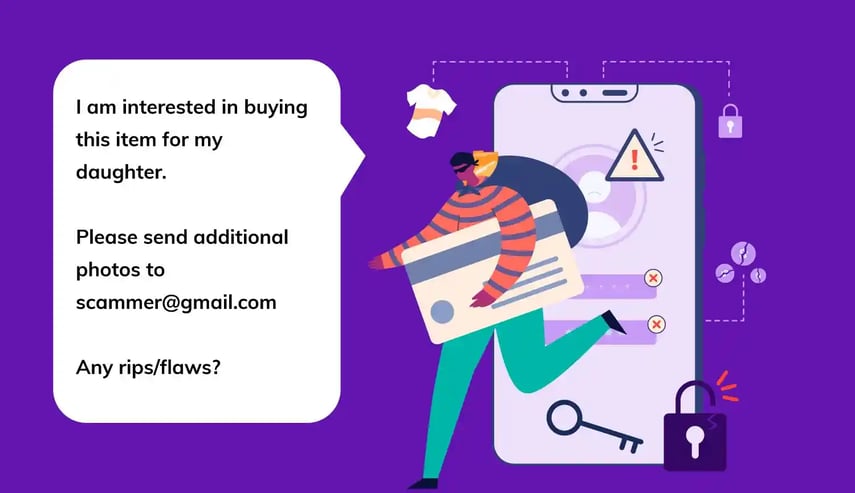
This is the most common scam on peer-to-peer marketplaces. You have probably received a comment or message like this when you list a brand new item for sale.
Scammers will ask you to contact them via email, phone, WhatsApp, or social media; the purpose is for them to get you to contact them privately so they can attempt fraudulent activity.
Depop is quick to delete fraudulent accounts, so scammers are racing against the clock to initiate contact with you in a private place.
Similarly, Depop has safeguards in place that do not allow for users to exchange information that suggests transactions outside of the Depop. Because scammers generally cannot exchange words and phrases that contain personal information or payment processing, the scammers want to entice you to leave the app for unmonitored conversation.
This can be very enticing for a seller, because they think they might be able to make a sale outside of Depop and avoid paying Depop fees.
Never take conversations or transactions off of the marketplace where you are selling. Not only is it against the TOS and you risk your account, but you risk getting scammed.
Following these rules not only protects your account but also answers the question is Depop legit? — because legitimacy depends on using the platform correctly.
The marketplaces offer seller protection (and buyer protection) which is part of what you pay in marketplace fees. You are not protected if a scammer tricks you into a Venmo or Cashapp scam.
Unfortunately, I have seen vulnerable sellers be scammed out of hundreds of dollars as a victim to this common scam.
2. Email-Hacking Scams
This scam occurs when someone asks you for your email address. ⚠️
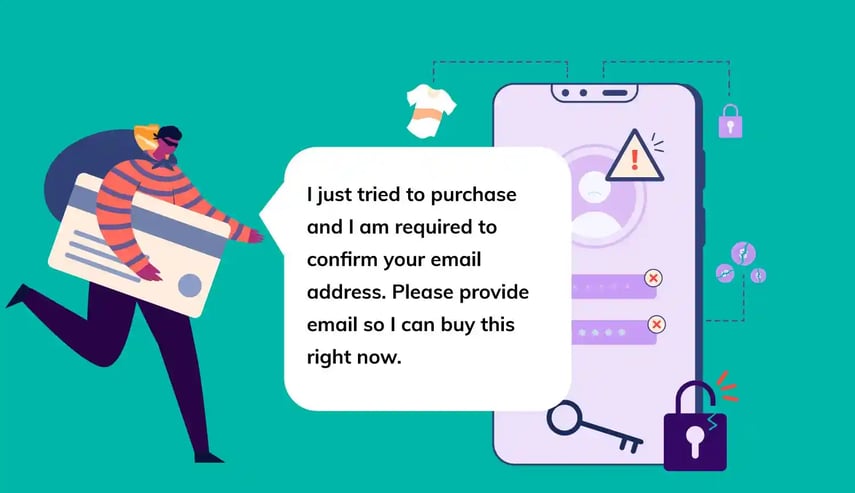
This is a clever scam as sharing your email address is seemingly harmless; it is not harmless. Your email address is valuable to a scammer.
Here are some ways a scammer will use your information If you provide your email address:
- Perhaps, they will use it to contact you to tell you there was a “processing issue” on the app, and request to make payment elsewhere.
- Perhaps, they will send you a fake email, that looks remarkably like a real email from Depop, to confirm the sale so you think the sale has occurred and you will ship.
- Perhaps, they will go to your email service and select “forgot password” to try to reset your password and hack your account and obtain personal information.
The fraudulent opportunities are really endless when a scammer has your email address. Do not share it on any marketplace; there is no reason to.
3. Reset Your Credentials Scam
This scam is when a user tries to hack your account, and bypass security measures like two-factor authentication. ⚠️
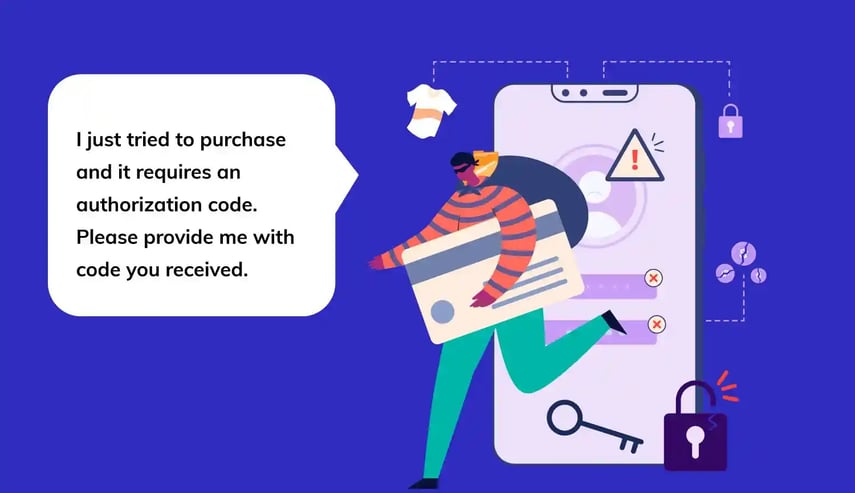
With these scams, a scammer is generally attempting to hack your account (whether it be your Depop account, email account, Paypal account, social media account).
For example, they go to your account and select “forgot password” and request a confirmation code to be sent to reset the password. If you quickly or carelessly provide them with this code, they will reset your account and lock you out of it. Never mind how much additional damage they can do once they have access to your account.

4. The Overpayment Scam
This scam is when a buyer overpays for an item so that they can claim it was a mistake and request a refund for the amount in error. ⚠️
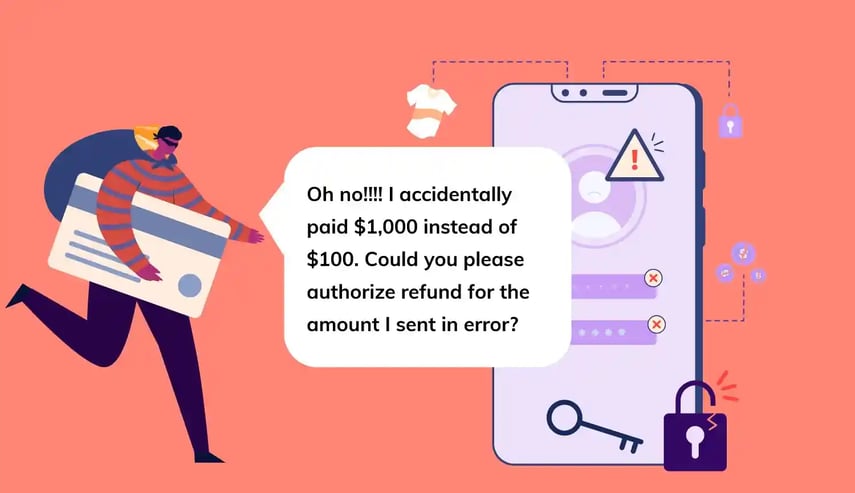
This is a whole new level of manipulation because a seller is inclined to believe that this was an honest mistake, and do the “right thing” and refund the excess.
Often, the scammer never actually paid at all. They either show you a fake graphic that shows a fake “proof of payment” or a fake email that says you have received over-payment. Often, these fake graphics appear nearly identical to the actual graphics that you would receive if you had truly been paid.
Other times, the buyer actually did complete payment… but they will thereafter attempt to fraudulently dispute the payment. While this is rare, it is a headache. If you did not save your communications with the buyer and do not have proof of shipment, they will be refunded; and you’ll be out the purchase price, the “overpayment refund” amount, your item, and hours of your life. Communicate with buyers and accept payments on the marketplaces directly to avoid this costly scam.

Ready to level up your reselling game? Don’t miss our list of Top Rated Online Marketplaces
5. The Swap Scam
This scam happens when a buyer purchases an item and swaps it out, and opens a claim that the item was “not as described.” ⚠️
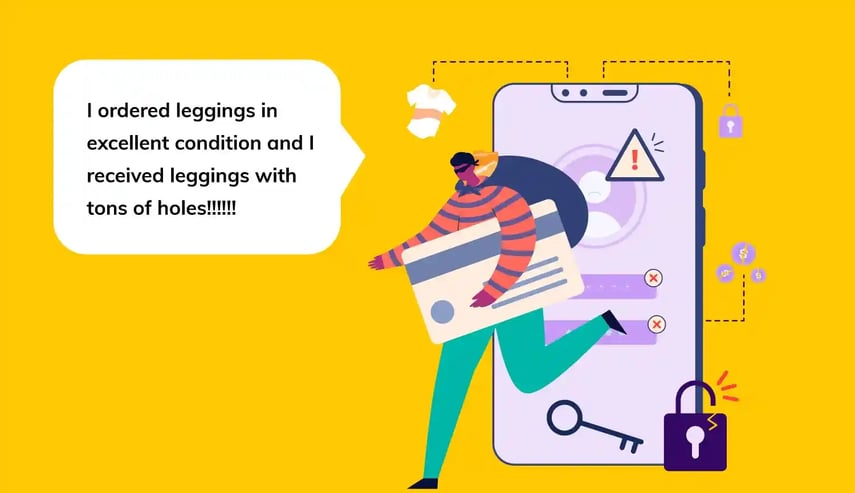
To be clear, a buyer in this instance will purchase an item from you that they already own, but in worse condition. Then, they will claim that they received your item damaged, and use the item that they already owned as “evidence” to conduct a scam.
This occurs occasionally with luxury items:
- Buyer purchases a designer bag.
- Buyer opens up a dispute with Depop.
- Buyer then takes pictures of a fake designer bag to use as evidence.
- Buyer lies and says you sent them a fake bag.
This is a tricky scam, as it becomes a he-said-she-said between the seller and buyer.
Unfortunately, if you do not have proof of the item you sent and it’s condition, Depop does not have much of a choice but to believe the buyer. 😢 Depop cannot just assume that the buyer is the scammer. Sellers can be scammers, too.
Some marketplaces handle this better than others, but there is no true way to prevent this scam.
As a habit, I photograph all items before shipment with the shipping label and a piece of paper with the buyer’s name and date. I photograph all angels and tags, so that I have photographic evidence of the condition that the item was sent in. This probably takes more time than it is worth, as scamming is fairly rare, but it has protected me against scams on both Depop and Poshmark.
Unfortunately, without any proof of what you sent, the scammer might be successful in their scam. You might try to zealously pursue justice, and Depop might protect you and refund the sale price, but it is an uphill battle that leaves legal recourse as your only choice. Legal recourse is unfortunately likely to be more costly than the amount that you were scammed for.
Remember that fraud and theft are unfortunately part of business, and there are dishonest criminals in the world.
Please do not be unnecessarily worried or suppose that every buyer is a scammer. It is not as common as you think. Most buyers buy your items because they want them!
Other Common Signs of Scams
Here are some other things to look out for as they may be red flags to alert you to fraudulent activity. 🚩
See the disclaimer below and remember that most of these red flags are not independently indicative of scam. However, if you see these combined with other shady activity, trust your instinct.
If you are ever unsure if you are being scammed, you can reach out to team Depop via the Help portal.
Brand New Accounts Scams
Brand new accounts certainly do not mean scam, we were all new once. But if you are receiving a suspiciously odd message from an account that was created the same day, this might be a cause for concern. Scammers constantly have to make new accounts as they are so frequently flagged and deleted.
Scammers will also manipulate you by pretending to be “new” so that you do not suspect they are scammers.
Poor Grammar Scams
First and foremost, poor grammar does not mean you are being scammed. People using poor grammar can be a result of poor education, second language, learning disability, or several other factors that we are not going to disrespect.
That said, when the poor grammar is coming from a company, like an email from Paypal, that should be a giant, gleaming red flag. Paypal is a professional organization with a professional copy-editing team and their correspondence will not have blatant errors in grammar or fluency.
WhatsApp, CashApp, and Venmo Scams
None of these apps (excluding registered business Venmo accounts) are meant for the purchase and sale of goods. In fact, they all explicitly ban the purchase and sale of goods and services.
They do not offer protection or assume any liability if you are scammed. When you conduct business on these apps, you are violating the law as you are evading sales tax, and you will not get your money back if you are scammed.
I do not recommend using these apps with anyone that you don’t know and trust.
Gift Card Scams
If you are being asked to buy with a gift card, absolutely do not do it. Scammers love gift cards because they are an easy way to create tangible value and complications in tracing.
If you ever receive a request to first purchase a gift card and then use the gift card to purchase the item- don’t.
If you ever get a request to accept overpayment and “please include a $100 gift card in the package as I am sending it to my niece for her birthday”- don’t.
If you ever buy a Walmart gift card on eBay and the cashier calls her manager and they try to detain you pending police response- don’t be surprised. Some businesses work to make gift cards more traceable because gift card scams are common in the real world and the reseller world.
Disclaimer: Most of these factors independently are not necessarily reason for suspicion. Do not assume that every potential buyer is a potential scammer, as that is really unfair to the majority of buyers who are good, honest people. ❤️
How to Prevent Scams Buying and Selling on Depop
While you needn’t be too paranoid about 99 percent of shoppers, there is the 1 percent of scammers with fraudulent intentions.
To recap, here is how to avoid Depop scams:
- Keep it on the marketplace. The best way to avoid being scammed is to follow the rules and keep transactions on Depop. Nearly all scams happen when sellers take communications and transactions off of the marketplace.
- Do not give personal information. This sounds obvious, but you would be surprised how many people willingly share their email, phone number, and account details.
- When in doubt, trust your instincts. Do not hesitate to decline requests that you are uncomfortable with or do not sound right. Do not hesitate to block and report accounts who have demonstrated legitimate fraudulent activity.
- Contact Customer Service. Do not hesitate to reach out to Depop customer support to describe any situation and seek advice or assistance.
Depop Scams FAQs
How do you know if someone is scamming you on Depop?
Scammers target both buyers and sellers. Buyers should be cautious of vague listings, stock photos, or sellers pushing for off-app payments. Sellers should watch out for buyers who overpay, rush transactions, or claim items didn’t arrive. Always keep transactions within Depop.
Will Depop refund me if I get scammed?
Yes—if you’re a buyer who checks out through Depop using PayPal or a card, you’re covered by Buyer Protection. Sellers are also protected if they ship with tracking and follow Depop’s rules. Refunds and claims won’t apply if deals happen outside the app.
How do you know if a buyer is scamming you?
Red flags for sellers include buyers insisting on shipping without Depop, claiming they’ll “send extra money,” or pressuring you to rush. Some may say an item didn’t arrive despite tracking. Always use tracked shipping and keep records within Depop’s system.
Can you get scammed on Depop as a buyer?
Yes. Sellers may face scams like buyers filing false “item not received” claims, asking for off-app payments, or using stolen payment methods. To stay safe, always ship with tracking, keep proof of postage, and only complete sales through Depop’s system.
Can you get scammed on Depop as a seller?
Definitely. Buyers risk scams such as counterfeit items, never receiving their order, or being tricked into paying outside Depop. The best protection is paying through Depop’s in-app checkout so you’re covered by Buyer Protection for refunds and disputes.
What happens if you get scammed on Depop?
For buyers, if you used Depop’s checkout, you can open a case and request a refund under Buyer Protection. For sellers, if you shipped with tracking and followed Depop’s rules, you’re protected against false claims. Off-app transactions leave both sides unprotected.