

The Nifty free trial lasts 7 days, requires a credit card upfront, and includes usage limits on crosslisting. Although Nifty offers access to its automation and inventory management tools, one week is a short window for resellers to evaluate software before committing to a paid subscription.
Here's what sellers should know before signing up and why alternatives like Vendoo's 14-day free trial may offer a better opportunity to test crosslisting software.
Main Takeaways
- Trial Duration: Nifty offers a 7-day free trial, giving sellers just one week to evaluate the software before billing begins.
- Credit Card Required: Users must provide payment information to activate the trial and cancel before it expires to avoid automatic charges.
- Usage Limits: Nifty limits trial users to 100 new listings and 50 Smart Credits, even on plans that include crosslisting.
- Sale Detection: Seven days may not provide enough time to experience an actual sale and confirm that automatic delisting works properly.
- Marketplace Support: Nifty supports five marketplaces, while Vendoo integrates with more than 10.
- Nifty vs. Vendoo: Vendoo offers a 14-day free trial with full feature access, native mobile apps, and more time to evaluate real reselling workflows.
How the Nifty Free Trial Actually Works
Nifty AI is a reselling software platform that combines crosslisting, inventory management, and marketplace automation. The free trial lets sellers explore these features before subscribing, but it comes with important conditions.
According to the Nifty Help Center, every plan includes a 7 day trial. However, access to certain features is limited, and payment information is mandatory.
Here's how the trial works:
- The Credit Card Requirement: Nifty requires users to enter credit card information through its payment provider, Stripe, before activating the trial. There is no initial subscription charge, but the selected paid plan automatically begins when the seven days expire. Sellers must actively cancel before the trial ends to avoid being billed on day eight.
- Trial Limits and Caps: Nifty provides full access to automation features during the trial. However, its Crosslisting and Bundle trials limit users to 100 new listings and 50 Smart Credits. Smart Credits are used for certain AI-powered features. Once either limit is reached, users must start their paid subscriptions early to continue using the capped functionality. Other tools, including drafts and auto-delisting, remain accessible for the rest of the trial.
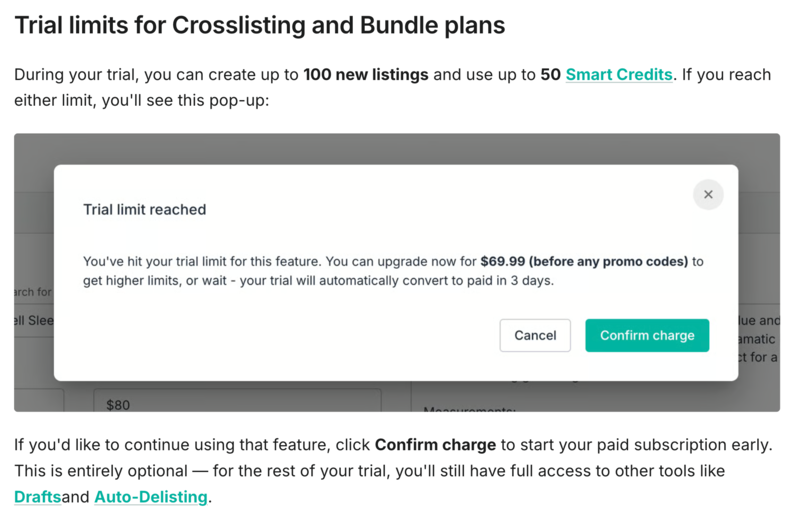
Image Source: Nifty Help Center - The 7-Day Countdown: The trial begins immediately after users select a plan and enter payment information. That means the clock is running while sellers connect marketplace accounts, import inventory, learn the interface, and experiment with listing tools. For sellers managing hundreds or thousands of items, setup alone can consume valuable testing time.
- Automatic Subscription Enrollment: Unless canceled, the trial converts into the selected paid subscription. According to Nifty’s website, its monthly Crosslisting Plus plan costs $39.99, while Crosslisting Pro costs $59.99. The combined Automation and Crosslisting plans start at $69.99 per month, with higher tiers costing more. Pricing and available discounts may change.
- Cancellation and Plan Changes: Nifty allows users to switch plans or cancel during the trial without a subscription charge. It also sends an email identifying the trial's expiration date and upcoming billing date.
The free trial isn't necessarily a bad offer. Seven days can be sufficient to explore the interface, test basic automation, and create several listings.
However, sellers should understand that full feature access does not mean unlimited usage. A trial capped at 100 listings may not accurately represent the workflow of a reseller who regularly manages significantly larger inventory volumes.

Evaluating Software: Why 7 Days Isn't Enough
Choosing crosslisting software involves more than determining how quickly an application can create listings. Sellers need to understand how reliably it manages inventory, responds to sales, and fits their daily operations.
A seven-day trial creates two significant problems:
Testing Auto-Delist and Sale Detection
One of the most valuable features of crosslisting software is automatic sale detection and delisting.
When an item sells on one marketplace, the software should identify that sale and remove the corresponding listing on other connected marketplaces. This prevents double-selling, canceled orders, disappointed customers, and potential marketplace account penalties.
However, sellers cannot fully evaluate this functionality simply by creating listings. They need actual sales.
Consider a reseller who crosslists a vintage jacket to Poshmark, eBay, Mercari, and Depop. The seller needs to see what happens when that jacket sells on eBay. Does the software recognize the transaction? Does it remove the jacket from Poshmark, Mercari, and Depop promptly? Are the inventory records updated accurately?
These are important questions that a seven-day trial may never answer.
An item might sell within hours, but it could also take several weeks. Even experienced resellers cannot guarantee an organic sale during a specific seven-day period.
Although Nifty includes auto-delisting access during its Crosslisting and Bundle trials, having access to the feature doesn't guarantee an opportunity to test it under real selling conditions.
The Weekend Factor for Part-Time Resellers
Many online resellers operate their businesses alongside full-time employment, family responsibilities, and other commitments.
For these sellers, listing inventory often happens during evenings and weekends.
A seven-day trial generally provides only one full weekend to photograph inventory, write descriptions, connect marketplaces, and test the software.
Imagine signing up on a Monday evening. Tuesday and Wednesday are spent connecting accounts and importing inventory. Thursday and Friday are busy with work, leaving Saturday and Sunday as the only substantial opportunities to test crosslisting. By Monday, the trial is already ending.
This creates unnecessary pressure to make a purchasing decision before experiencing the software under normal working conditions.
A longer trial allows sellers to evaluate practical considerations such as listing speed, bulk inventory management, marketplace compatibility, and how easily the software fits into their existing routines.
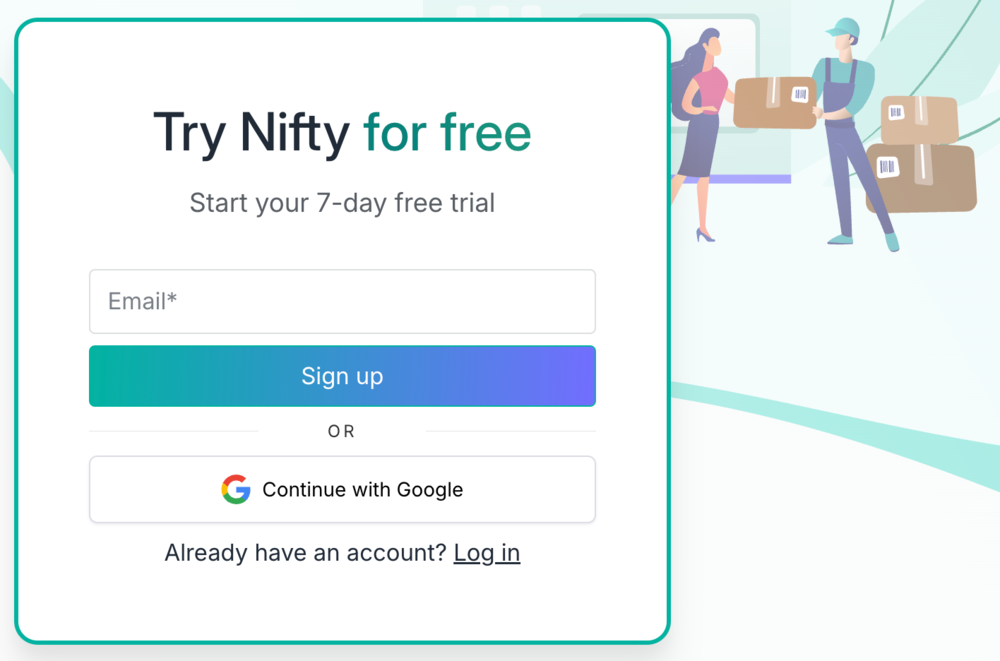
A good free trial should provide enough time to evaluate results, not just explore features.
Comparison Table: Nifty vs. Vendoo Free Trials
Here's how the Nifty free trial compares to Vendoo’s free trial in duration, access, marketplace integrations, and mobile availability.
You might also be interested in the article The Best Crosslisting Apps for Resellers in 2026.
Nifty vs. Vendoo: Comparing Free Trails
For sellers who want more time to evaluate crosslisting software, Vendoo offers a compelling alternative.
Vendoo provides a 14-day free trial with access to its crosslisting, inventory management, sale detection, and other reseller tools.
The biggest advantage isn't simply having twice as many days. It's having more opportunities to evaluate the software under realistic selling conditions.
14 Days of Freedom
Vendoo's free trial provides two full weeks to explore the platform, including two weekends for sellers who operate their businesses part-time.This gives users more time to connect their marketplace accounts, import existing inventory, create listings, and experiment with bulk management tools.
For example, a reseller could spend the first weekend importing inventory and crosslisting products. During the following week, they could monitor listings, evaluate the inventory dashboard, and track any sales.
The second weekend provides another opportunity to list new inventory, explore additional features, and assess whether the software saves time.
Importantly, Vendoo includes Sale Detection and Auto Delist on supported marketplaces.
With a longer trial, sellers have a better chance of experiencing a genuine sale and observing how the software handles inventory synchronization. Fourteen days still cannot guarantee a sale, but it provides a more practical evaluation period than seven days.
Vendoo also advertises full feature access during its trial, including inventory management, delisting and relisting tools, listing templates, analytics, and downloadable inventory spreadsheets. Sellers can explore the platform's capabilities without Nifty's specific 100-listing trial cap.
Testing True Mobility
Another important distinction is mobile accessibility.
Nifty operates through a web browser and does not currently offer a dedicated iOS or Android application.Vendoo, however, provides native mobile apps for both Apple iOS and Android.
For resellers who source inventory at thrift stores, estate sales, garage sales, and retail clearance events, mobile access can make a meaningful difference.
Imagine finding a valuable vintage handbag while sourcing. With Vendoo's mobile app, sellers can begin creating an inventory record, adding photographs, and preparing listing details directly on their phones.
They can also manage existing inventory and access their reselling tools without relying exclusively on a desktop computer.
During the 14-day trial, sellers can test these mobile workflows in real situations rather than guessing how useful the app might be.
A browser-based platform may work perfectly well for sellers who primarily list at home. However, dedicated mobile functionality is particularly valuable for resellers who frequently work outside their offices.
Global Reach Expansion
Marketplace compatibility is another important consideration when evaluating crosslisting software.
Nifty supports five marketplaces, while Vendoo integrates with more than 10.
Vendoo supports popular platforms including eBay, Poshmark, Mercari, Depop, Etsy, Grailed, Vestiaire Collective, Whatnot, Shopify, Facebook Marketplace, SellWild, and others.
For sellers interested in expanding their businesses, these additional integrations provide opportunities to reach different audiences.
A vintage clothing reseller, for example, might already sell on Poshmark and eBay but want to experiment with Depop, Etsy, or Grailed.
Instead of manually recreating listings on each platform, the seller can evaluate Vendoo's crosslisting tools during the free trial.
The additional week provides more time to determine which marketplaces are appropriate for their inventory, how efficiently listings transfer, and which integrations fit their business.
Of course, listing on more marketplaces does not automatically guarantee more sales. Product demand, pricing, competition, and marketplace fees still matter. However, broader marketplace access creates more opportunities to reach potential buyers without maintaining separate manual listing workflows.
For sellers who want to expand their reach while maintaining organized inventory, this flexibility can improve the potential return on their software investment.
Vendoo's trial also includes access to inventory analytics and management tools, helping sellers evaluate more than just listing creation.
Ultimately, the best crosslisting software is the one that saves time, supports your marketplaces, and manages inventory reliably. A longer trial makes those qualities easier to assess before committing financially.
Is the Nifty Free Trial Worth It?
The Nifty free trial offers seven days to explore its automation and crosslisting tools, but the credit card requirement, listing caps, and short evaluation window are notable drawbacks. For resellers who want sufficient time to test real sales, inventory synchronization, mobile functionality, and marketplace integrations, Vendoo offers a stronger alternative.
With 14 days of full feature access and support for more than 10 marketplaces, Vendoo’s free trial provides a more practical opportunity to evaluate crosslisting software before paying.
Nifty Free Trial FAQs
How long is the Nifty free trial?
The Nifty free trial lasts seven days. After the trial expires, Nifty automatically activates your selected paid subscription unless you cancel beforehand.
Does Nifty require a credit card for its free trial?
Yes. Nifty requires a credit card to activate its free trial. Payment information is collected through Stripe. If you do not cancel before the seven-day trial ends, Nifty automatically begins billing you.
Is the Nifty free trial unlimited?
No. Nifty limits its Crosslisting and Bundle trial users to 100 new listings and 50 Smart Credits.
Can I cancel my Nifty free trial before being charged?
Yes. Nifty allows users to cancel their subscriptions during the seven-day free trial without being charged. You must complete the cancellation before the trial expires to prevent automatic billing.
What is the best alternative to the Nifty free trial?
Vendoo is a strong alternative for resellers who need more time to evaluate crosslisting software. It offers a 14-day free trial, full feature access, support for more than 10 marketplaces, a mobile app, and automatic sale detection on supported marketplaces.