

AutoPosher was once a popular automation or “Poshmark Bot” built primarily for Poshmark sellers. It focused on automating repetitive engagement tasks like sharing and relisting, while also offering crosslisting to a small group of marketplaces such as eBay, Mercari, and Depop.
In 2025, AutoPosher was officially rebranded as Nifty, with accounts migrated to a new platform that added AI listing tools, a redesigned interface, and improved analytics. Some resellers appreciated the time savings and automation. Others reported issues like pricing tiers, feature limits, bugs, and fewer marketplace integrations than competitors.
Today, many resellers compare AutoPosher’s legacy features and Nifty’s current offerings to tools like Vendoo and other crosslisting platforms to decide what works best for their business.
Main Takeaways
- Legacy focus: AutoPosher specialized in Poshmark automation like sharing, relisting, and offers, plus very basic crosslisting to a few marketplaces.
- Rebrand: AutoPosher became Nifty in 2025. Existing users were transitioned to a new interface with AI listing tools and analytics.
- Pricing: Legacy AutoPosher ranged roughly from $25 per month for single-platform automation to $40 to $90 per month for bundles.
- Pros from Users: Cloud-based automation, hands-off engagement, and auto-delist features for some marketplaces.
- Cons from Users: Limited marketplace support, credit caps before the rebrand, reported bugs, and gray-area bot risks.
- Comparison: Many resellers compare AutoPosher or Nifty to Vendoo due to broader marketplace coverage and consistent inventory syncing.
What Was AutoPosher?
AutoPosher started as an automation tool focused on Poshmark tasks. It helped resellers automate sharing listings, sending offers, following users, and relisting stale items.
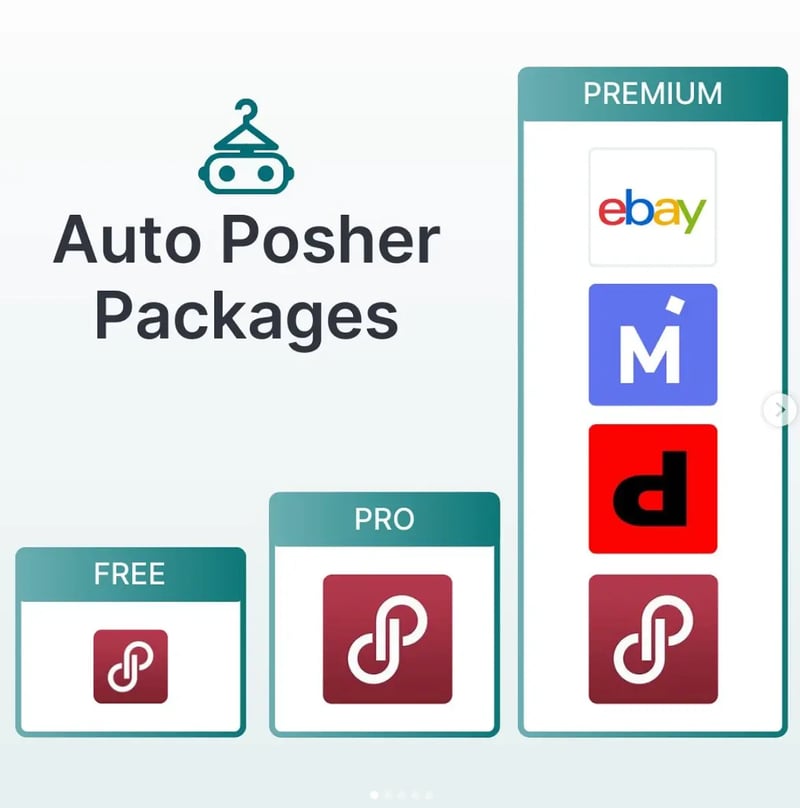
It also added crosslisting support to a small set of marketplaces, including Poshmark, eBay, Mercari, and Depop. This made AutoPosher appealing to mid-volume resellers who wanted automation and crosslisting in one place.
Around 2025, the company began shifting toward a broader tool called Nifty AI, expanding beyond Poshmark automation to include AI listing tools and analytics. The full rebrand became more visible in early 2026, when AutoPosher branding largely disappeared, and users were directed to Nifty’s platform.
AutoPosher was not ideal for beginners with a small number of listings or for sellers who needed support for many marketplaces. AutoPosher wasn’t a particularly popular Poshmark bot, with its competitors being a more sought-after option.
While the rebrand presumably sought to increase popularity, the same has not yet been realized. Most sellers seek safer, more robust crosslisting programs that offer a wider range of marketplaces, like Vendoo.
AutoPosher Key Features
Prior to becoming Nifty, AutoPosher was known as a Poshmark Bot. Eventually, AutoPosher expanded to also offer some basic crosslisting tools.
Here’s what AutoPosher was known for:
Poshmark Automation
AutoPosher automated daily Poshmark activity such as closet sharing, offers to likers, follows and unfollows, and automatic relisting. These features helped maintain listing visibility without manual work and were one of the tool’s biggest selling points for active Poshmark sellers.
Crosslisting and Inventory Sync
AutoPosher allowed bulk importing of listings and crosslisting to a small group of supported marketplaces. It included auto-delist when an item sold elsewhere and basic inventory tracking, which helped reduce overselling and saved time compared to manual posting.
Bulk Actions and Photo Tools
Some AutoPosher plans included bulk listing edits, background removal tools, and listing templates. These tools made listing faster, but they were less advanced than full inventory management platforms that specialize in photo editing and workflow automation.
Since rebranding to Nifty, the platform added AI listing generation from photos, an updated analytics dashboard, a cleaner interface, and expanded Etsy integration in some plans. These updates were meant to modernize the platform and compete with newer reseller tools that offer AI and deeper reporting. Today, Nifty is known for its AI tools.
AutoPosher Pricing
AutoPosher pricing depended on automation features and crosslisting needs.
| Plan / Type | Approx. Monthly Price | Key Inclusions / Limits | Notes |
|---|---|---|---|
| Single-Platform Automation | $25 | Poshmark or eBay bots | Entry, platform-specific |
| Multi-Platform Automation | $35–$40 | Actions and automation across 4 platforms | Limited crosslisting |
| Crosslisting / Bundle | $40–$90 | Full features, more credits | Higher for volume |
AutoPosher also used listing credits or “Smart Credits” in some plans, which were provided and used for various actions and limited heavy use. AutoPosher also offered a free trial.
After the Nifty transition, some credit systems changed, but pricing remained similar or higher for full access.
Pros and Cons of AutoPosher
We searched the internet, including Reddit threads and reseller Facebook Groups for reviews. Here are the highlights of reseller feedback and independent reviews about AutoPosher.
AutoPosher Pros
- Strong Poshmark automation saved hours of manual sharing
- Cloud-based automation worked without leaving your computer on
- Combined automation and crosslisting in one tool
- Auto-delist features helped prevent double-selling
AutoPosher Cons
- Limited marketplace integrations
- Credit systems restricted heavy users
- Pricing increased quickly for multi-platform features
- Reports of bugs or syncing problems
- Bot-style automation could risk marketplace account warnings
- Rebrand confused some users
Many resellers said AutoPosher worked best when Poshmark was their main platform.
The Rebrand: What Happened to AutoPosher?
AutoPosher did not suddenly become Nifty overnight… the company began shifting toward the Nifty platform around 2025 as it expanded features beyond Poshmark automation.
By early 2026, the rebrand was widely public and AutoPosher branding was largely replaced with Nifty’s interface and product name.
Changes included:
- AI listing tools
- Updated analytics
- Expanded marketplace integrations
- Cleaner dashboard
Some users liked the upgrades. Others felt the new pricing did not match the added value.
How AutoPosher Compared to Alternatives
AutoPosher comparisons often involve Vendoo and similar crosslisting tools.
Legacy AutoPosher vs Vendoo:
| Feature | AutoPosher | Vendoo |
|---|---|---|
| Poshmark Automation | Strong | Moderate: offers and sharing |
| Marketplace Support | 4–5 marketplaces | 11+ marketplaces |
| Inventory Sync | Basic | Advanced |
| Auto-Delist | Available | Consistent |
| Analytics | Basic (pre-rebrand) | Advanced |
| Mobile App | No (pre-rebrand) | Yes |
Many resellers who sell on multiple marketplaces prefer broader platform coverage than the small volume of marketplaces offered by AutoPosher and now Nifty.
Is AutoPosher Worth It in 2026?
AutoPosher no longer exists as a separate product. It is now part of Nifty, sometimes referred to as Nifty AI.
Nifty can still be useful for sellers who rely heavily on Poshmark automation and want AI listing tools in one platform. However, drawbacks like limited marketplace integrations, pricing tiers, and past reliability concerns lead some resellers to try alternatives.
Testing free trials of Nifty and competitors is the best way to decide.

AutoPosher vs. Vendoo FAQs
What happened to AutoPosher?
AutoPosher transitioned into Nifty AI in 2025, with the rebrand widely visible by early 2026.
Is AutoPosher the same as Nifty?
Nifty is the updated platform built from AutoPosher’s technology with added AI tools and analytics.
What were AutoPosher’s main legacy features?
Poshmark automation, like sharing and relisting plus crosslisting to marketplaces such as eBay and Mercari.
How much did AutoPosher cost pre-rebrand?
Plans ranged from about $25 per month to $90 per month, depending on automation and crosslisting features.
How does AutoPosher or Nifty compare to Vendoo?
AutoPosher and Nifty are known for Poshmark automation. Vendoo is often preferred for broader marketplace support and inventory syncing.
What are common complaints about AutoPosher?
Common complaints included limited marketplaces, pricing tiers, credit caps, syncing issues, value for product, and confusion after the rebrand.