
Is Etsy Legit? Direct answer: Yes, Etsy is a legitimate marketplace. It is a publicly traded company with millions of transactions every year. That said, scams and counterfeits exist because almost anyone can open a shop. Etsy is a loved and trusted global marketplace, but individual sellers can be dishonest.
That distinction matters. Etsy provides the platform, payment system, and dispute process. Sellers control listings, shipping, and product quality. Knowing where Etsy’s responsibility ends and the seller’s begins sets realistic expectations and helps you avoid common problems. Below, we break down exactly how this works and what to watch for.
What Etsy Is (and Why “Legit” Depends on the Seller)
Etsy is a marketplace, not a single store. Think of it as a mall rather than a brand. Each shop is run by an independent seller who sets prices, ships items, and handles inventory.
Because of this structure, experiences can vary widely. Many sellers are legitimate small businesses, artists, and vintage dealers. Others may cut corners or violate Etsy’s rules.
Common reasons people doubt Etsy include:
- Delivery issues: Late shipments, missing tracking, or items marked shipped but not yet sent.
- Counterfeit or dropshipped goods: Items advertised as handmade or vintage that are actually mass-produced.
- Off-platform messages: Sellers asking buyers to pay outside Etsy or continue communication via email or text.
- Misleading photos: Stock images or stolen photos that do not match the item received.
These problems are tied to individual sellers, not the platform itself. Understanding that distinction is key to using Etsy safely.
Because there are dishonest people in the world, occasional poor experiences are inevitable. Thankfully, Etsy offers phenomenal buyer and seller protections to mitigate the same.
Etsy Safety Features and Buyer Protections (What Etsy Covers)
Etsy has built-in protections designed to reduce risk, as long as buyers stay on the platform and follow the rules.
Best practices advises buyers to:
- Pay only through Etsy checkout, rather than off-platform payments.
- Keep all communication within the Etsy Messages system, and do not click external links.
- Never share personal or financial information with sellers.
- Be cautious of pressure tactics or urgency.
You must follow Etsy’s terms of service to preserve your eligibility for protection.
Etsy Purchase Protection
Etsy Purchase Protection is designed to safeguard buyers when transactions go wrong, but it only applies if specific requirements are met. Understanding what qualifies and where the limits are is critical for setting realistic expectations.
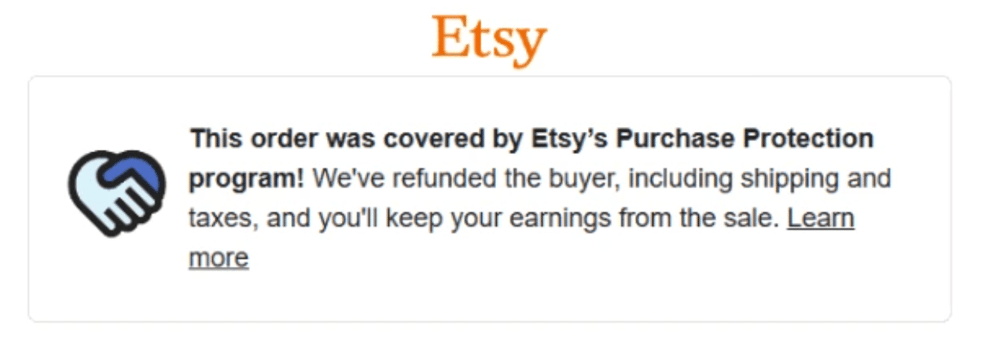
Etsy Purchase Protection applies only to qualifying orders, which means the purchase must meet all of the following conditions:
- The sold item must be compliant. Items that violate Etsy’s policies (that cannot be listed on Etsy), are excluded from protection.
- Paid through Etsy checkout. Payments must be completed using Etsy’s integrated payment system (rather than a third-party payment system such as Venmo)
- Shipped to the address on the order. Sellers must ship to the exact address provided at checkout. If a seller agrees to ship to a different address through messages, Etsy may deny coverage.
💡Tip: Etsy allows the sale of three things: vintage items that are at least 20 years old, craft supplies, and handmade items (or original designs printed with a production partner).
So long as those conditions are met, Etsy may step in if one of the following issues occurs:
- Item never arrived. Tracking shows no delivery, or the package is lost in transit without proof of successful delivery.
- Item was damaged in shipment. The item is broken or unusable due to shipping damage, and the buyer provides clear photo evidence.
- Item not as described in a material way. The received item differs significantly from the listing description, photos, or stated condition. This includes wrong materials, incorrect sizing beyond a reasonable variance, or undisclosed defects.
Etsy Purchase Protection does not cover every instance of buyer dissatisfaction. There are also important limitations. Issues that are not awarded protection include:
- Buyer’s remorse. Simply changing your mind about a purchase does not qualify for a refund under Etsy’s protection.
- Minor variations clearly disclosed in the listing. Handmade and vintage items may have small differences, especially when sellers disclose this upfront.
- Items purchased off-platform. Any transaction completed outside Etsy’s checkout system is excluded, even if messages occurred on Etsy.
Etsy also does not guarantee authenticity in every case, particularly for vintage or branded goods. However, Etsy may issue a refund if a listing is found to be misleading, materially misrepresented, or in violation of Etsy’s policies after review.
Etsy’s protections are strongest when buyers and sellers follow Etsy’s rules exactly. Staying on-platform, documenting issues early, and escalating through Etsy’s case system when necessary preserves eligibility for help.

The Most Common Etsy Scams (and How to Spot Each One)
Scams on Etsy often follow identifiable patterns. Being aware of these helps you spot them before you lose money. Here are some of the most commonly reported scams and red flags.🚩
|
Scam |
What it looks like |
How to avoid |
What to do |
|
Fake / Counterfeit Items |
Branded or vintage items priced far below market |
Check reviews, compare prices, reverse image search |
Open a buyer dispute case |
|
Fake Etsy Shops |
New shops with few reviews and no shipping |
Buy from established shops |
Open a non-delivery case |
|
Bait-and-Switch |
Item received doesn’t match listing |
Read descriptions, check reviews |
Document and open a case |
|
Wrong-Address Shipping |
Tracking shows delivered, item missing |
Verify address and tracking |
Open a case immediately |
|
Off-Platform Payments |
Asked to pay via Venmo, Zelle, gift cards |
Pay only through Etsy checkout |
Report the seller |
|
Phishing Messages |
Messages asking you to “verify” info |
Never click links or share info |
Report the message |
|
Fake Photos / Reviews |
Stock or stolen images |
Reverse image search |
Avoid or report listing |
Learn more about common Etsy scams and how to prevent them in the article Etsy Scams.
How to Buy Safely on Etsy (Step-by-Step)
Shopping safely on Etsy is about following a repeatable process.
Before checkout:
- Read full item descriptions and review all photos carefully.
- Check seller history, review quality, and how long the shop has been open.
- Confirm processing times and return policies.
- Evaluate whether the price makes sense for the claimed item.
- Be sure the item is compliant (that it is allowed to be sold on Etsy)
During checkout:
- Pay only through Etsy checkout.
- Keep all communication in Etsy Messages.
- Avoid sellers who urge off-platform communication or payment.
- Be sure you follow the Etsy terms of service.
After ordering:
- Monitor tracking updates through Etsy.
- Save screenshots of the listing, order confirmation, and messages.
- Contact the seller immediately if something seems off.
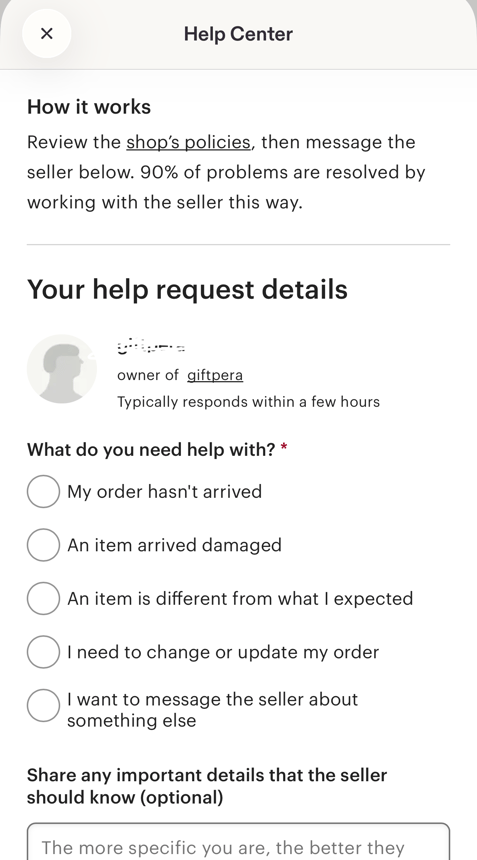
On Etsy, you must reach out to the seller first to seek resolution before you can initiate a formal claim process.
If something goes wrong:
- Message the seller politely with specifics about the issue.
- If unresolved, open a case with Etsy with documentation and photos.
- Follow Etsy’s case procedures and timelines.
Is Etsy Safe for Sellers?
Etsy is generally safe for sellers, but it is not without risk. Because Etsy operates as an open marketplace, sellers are responsible for protecting their own accounts, complying with platform policies, and managing disputes professionally. Some sellers encounter chargebacks or fraudulent disputes from buyers, particularly when tracking information is incomplete or communication breaks down.
Others may be targeted by phishing attempts that impersonate Etsy support, often through messages asking sellers to click links or verify account details. Account takeovers can also occur when passwords are weak or reused across platforms.
In addition, sellers may face misrepresentation claims or listing removals if Etsy determines that a product violates policy, even unintentionally.
Seller protection on Etsy largely depends on how closely sellers follow Etsy’s rules and security guidance.
Etsy does offer dispute resolution tools and seller protections in qualifying cases, but sellers must be able to show proper documentation, compliance with shipping requirements, and clear communication history.
Quick Verdict: Should You Use Etsy?
So, is Etsy legit? Yes. Etsy is a legitimate marketplace with real buyer and seller protections, used by millions of people worldwide. However, because Etsy is a platform made up of independent sellers, scams and misrepresentation can occur. The safest way to use Etsy is to understand how the marketplace works, follow Etsy’s on-platform rules, and recognize common scam patterns before they become problems.
When used correctly, Etsy is a valuable tool for researching prices, buying unique items, and running a resale or handmade business. Buyers who pay through Etsy checkout and sellers who follow Etsy’s policies are best positioned to benefit from the protections Etsy offers.
Do you buy or sell on Etsy? Share your experience below 👇🏽
FAQs
Is it safe to buy from Etsy?
Yes. Buying from Etsy is generally safe as long as you pay through Etsy checkout and keep all communication on the platform.
How to tell if an Etsy seller is real?
Look at how long the shop has been open, read reviews carefully, examine whether photos appear original, and avoid sellers who request off-platform payment or communication.
What is the downside of Etsy?
Item quality and authenticity can vary by seller. Buyers must do their own research, and sellers must navigate platform fees (make sure you visit our Etsy fee calculator), strict policies, and occasional disputes.
Is Etsy a Chinese company?
No. Etsy is a United States–based company founded in New York and publicly traded in the United States.