
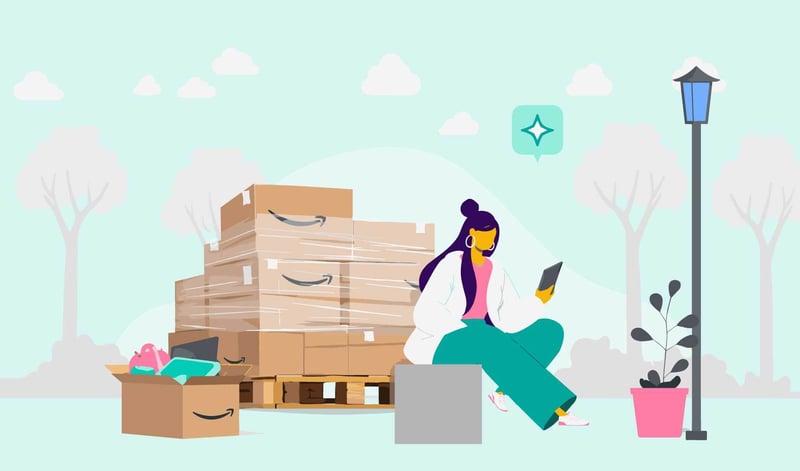
Buying Amazon liquidation pallets can be a profitable way to source inventory by purchasing bulk customer returns, overstock, and shelf-pulls below their original retail value. However, you will need a solid strategy to sort through the junk, find the best merchandise, and flip your items for a profit.
In this guide, we will break down exactly where to safely buy authentic Amazon pallets, how to avoid common scams, and the best tools to use so you can process your inventory efficiently and scale your business.
What are Amazon Liquidation Pallets?
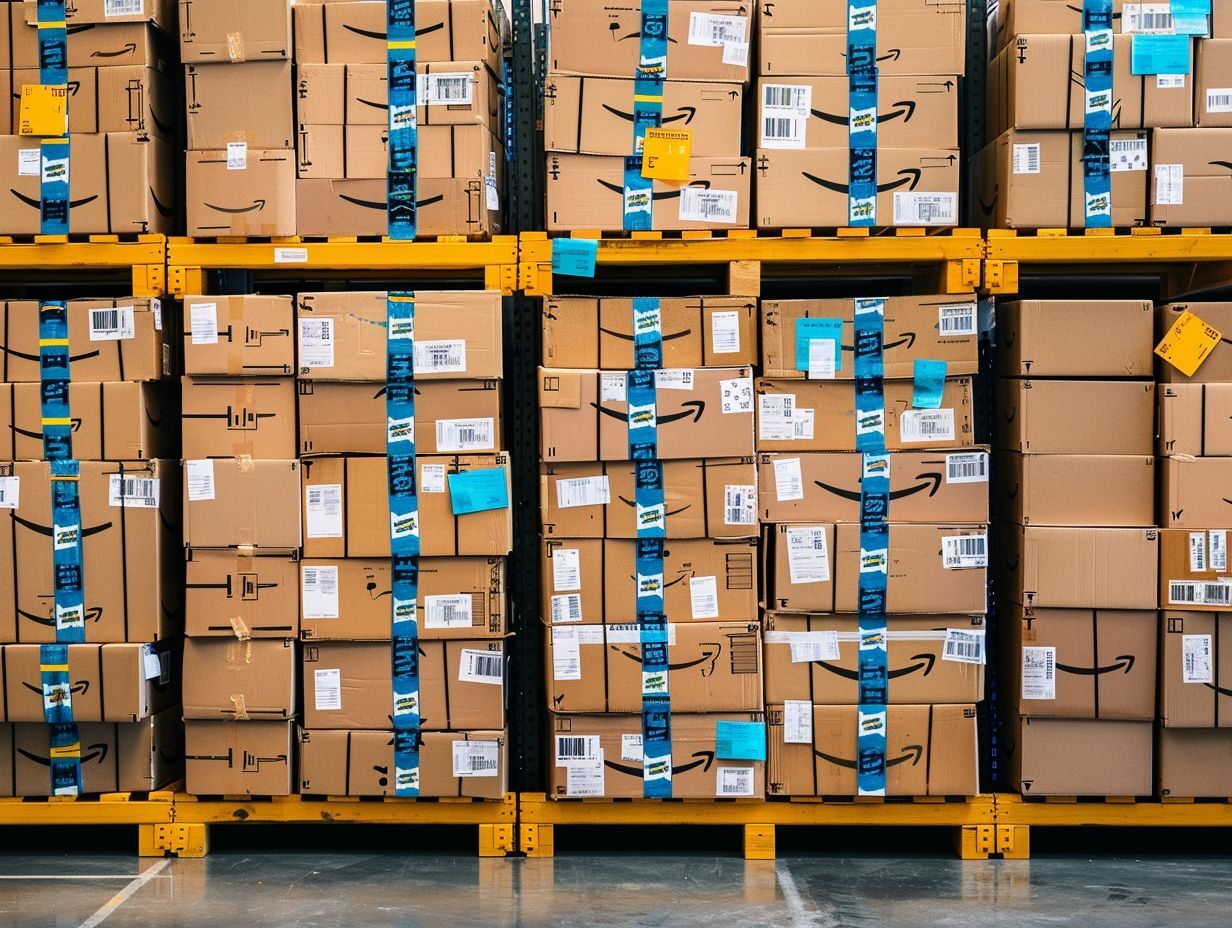 Image Source: BellaVix
At its core, an Amazon liquidation pallet is exactly what it sounds like: a massive pallet either shrink wrapped together, or a cardboard crate, stuffed with bulk goods Amazon needs to get rid of.
Instead of wasting time and money testing and repacking returns or unsold inventory, Amazon bundles items into pallets and sells them to liquidation companies, who pass them on to resellers.
If you spend any time on social media, you've probably seen the viral videos of people opening mystery boxes or pulling out high-end items from a pallet. But the reality is that, while pallet flipping is a legitimate business, it's definitely not a way to get rich quick.
Success in 2026 requires handling logistics like sourcing from legitimate partners, understanding freight shipping, and using a multi-platform syndication software to process high-volume inventory before storage costs eat your profits.
Where to Buy Amazon Liquidation Pallets in 2026
Once you understand what an Amazon liquidation pallet is, it's time to go find some to buy. Unfortunately, you can't just drive up to an Amazon fulfillment center to buy their pallets.
Amazon offloads its excess inventory through official business-to-business (B2B) liquidators. If you want to get your hands on actual inventory, knowing where to buy things in bulk to resell is the key to finding legitimate pallets instead of getting scammed.
Verified Auction Platforms
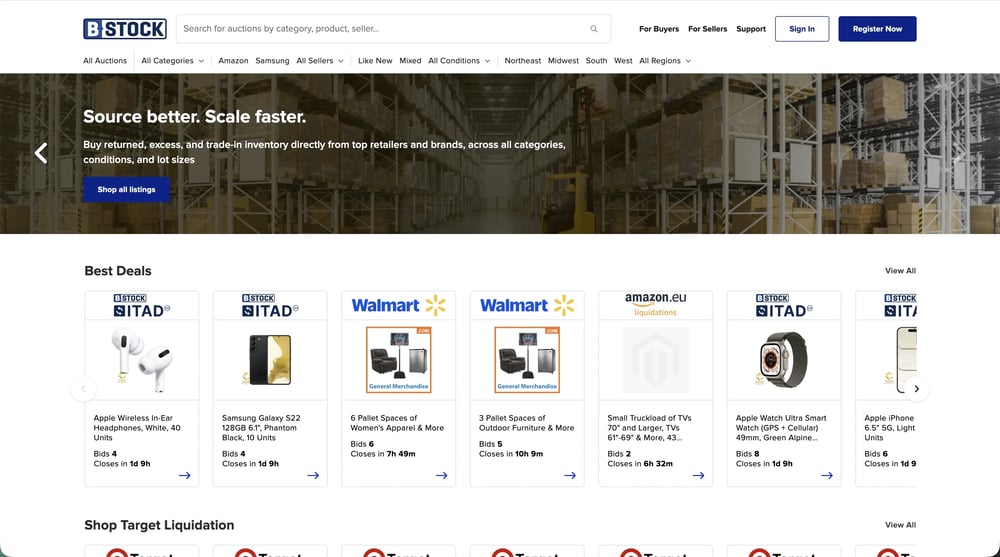
Your safest bet is to go through established, verified marketplaces.B-Stock is a huge one to start with. They actually run the official Amazon US and EU liquidation auctions. Other major suppliers include Direct Liquidation, which is a primary marketplace for manifested returns. For resellers looking to cut costs even further, Bluebox is another option worth exploring. Just keep in mind that to buy from these sites, you'll need to set up a registered account, and you usually need a business resale certificate so you can get sales tax waived.
Local Bin Stores & Warehouses
If you're just starting out, searching for local liquidation warehouses or bin stores in your area is a great move. Why? Because you can physically drive over, look at the pallet, and load it into your own vehicle. Doing this allows you to completely bypass freight shipping fees, which keeps your risk way lower while you learn the ropes of pallet buying.
Avoiding the "Mystery Box" Scam
While there may be some good deals out there, it's best to stay away from random third-party sellers selling unmanifested pallets on Facebook Marketplace, local groups, or Instagram.
Most of the time, these are picked over salvage items from sellers who buy legitimate pallets, pluck out all the high-value electronics and designer goods to sell themselves, re-wrap the remaining low-value junk, and sell it to unsuspecting beginners as a "mystery pallet" with zero chance of making your money back.
Reading Manifests and Understanding Condition Grades
Before you place a bid or hand over any cash, make sure you understand how to evaluate a pallet so you can make smart buying decisions and avoid losing money. This comes down to two main things: reading the manifest and understanding condition grades.
The Importance of the Manifest
A manifest is basically an itemized receipt showing you exactly what's inside the pallet before you buy it. It will list the item names, how many there are, their Amazon ASIN numbers, and the original retail price (MSRP).
A good rule of thumb for bidding is to never pay more than 20% to 30% of that total retail value. For example: if a pallet has $10,000 worth of original retail products on the manifest, your max bid should top out around $2,000 to $3,000. This leaves you a safety net for fees, shipping, and items you might not be able to sell.
Condition Grades
Liquidation inventory is divided into different categories, and you need to know what you're signing up for:
- Overstock / Shelf-Pulls: These are brand new items that never sold. They cost the most to buy, but they are ready to list immediately without any cleaning or testing.
- Uninspected Returns: This is a mixed bag. These are items customers sent back for any number of reasons. You might find a factory-sealed laptop right next to a broken coffee maker. It's a gamble, but if you get lucky there can be a high profit potential.
- Salvage: These items are broken, heavily damaged, or missing parts. Unless you are great at repairing electronics or want to sell items strictly for parts, it's best to avoid these.

The Hidden Costs of Pallet Flipping
Many people get so excited about the potential profits of pallet flipping that they tend to underestimate the operational costs of running this type of business.
Buying the pallet isn't the only expense and if you aren't careful, the hidden costs can completely wipe out your profits.
Here are some hidden costs to watch out for:
- Freight and Liftgate Fees: Unless you're buying locally and picking up the pallet yourself, navigating shipping and handling costs is one of the biggest expenses in this business. Shipping a heavy pallet across the country via freight can easily cost hundreds of dollars.
On top of that, if you are having the pallet delivered to a residential address rather than a business with a commercial loading dock, you'll usually get hit with a "liftgate fee." This is an extra $50 to $100 that freight companies charge just to use the hydraulic lift on the back of the truck to lower the pallet to your driveway. - Time and Storage Space: A single pallet can easily contain dozens, or even hundreds, of individual items. Once it's dropped off at your house, you have to put in the actual manual labor.
You have to find physical space to unbox everything, clean off dust or sticky return labels, test electronics to make sure they actually work, and photograph everything. Good reseller tips for inventory management can help, but it still takes more time and physical space than most beginners estimate.
2026 Platform Strategy: Where to Sell Pallet Inventory
Multi-Platform Syndication for High-Volume Inventory

Buying the pallets is the fun part, but the work really starts once it's delivered. Suddenly you have a massive pile of inventory sitting in your house or workspace. This is where things tend to bottleneck, and the best way to clear out bulk stock you get from Amazon liquidation pallets efficiently is to use a tool like Vendoo.
Here's how Vendoo can help:
Automated Crosslisting
Instead of manually copying and pasting your photos, titles, and descriptions onto five different marketplaces, you create a single draft inside Vendoo, making it simple to learn how to sell on multiple platforms without the extra hassle. From there, you can instantly push that listing to eBay, Mercari, Poshmark, and Facebook Marketplace, and more simultaneously. This multiplies your visibility and helps you flip items much faster.
Strategic Salvage Sales
If you have broken or incomplete electronics, you can quickly list them "For Parts or Not Working" on eBay to target repair hobbyists and recoup your baseline costs. At the same time, you can still manage and list the fully functional items across other platforms without messing up your workflow.
Auto-Delist Protection
When you are selling unique items across multiple marketplaces, double-selling is a major risk. If an item sells on eBay and someone else buys it on Mercari before you can manually take it down, you are forced to cancel an order.
This can really hurt your seller metrics. Vendoo prevents this with automated sale detection, which instantly deletes the listing from all other platforms the moment it sells.
Start Sourcing Inventory with Amazon Liquidation Pallets
Buying Amazon liquidation pallets is a legitimate way to source inventory, but making it work requires a strategic approach. You have to buy carefully from verified platforms, accurately calculate your shipping costs, and get your items online before they pile up.
If you are ready to start and want to avoid the listing bottleneck, try a 14-day free trial of Vendoo. It will help you crosslist your items, manage your stock, and get things sold fast.
FAQs
How much does an Amazon return pallet cost?
The price of a pallet depends on what's inside, how large it is, and more. Smaller, unmanifested pallets can cost anywhere from $250 to $700. Higher-value category pallets like tools or electronics can easily run between $1,000 to over $5,000.
Is it profitable to buy Amazon return pallets?
You can definitely profit on Amazon pallets, but it's not guaranteed. It depends on your ability to accurately read manifests, how much shipping will cost, pricing your items correctly, and moving them quickly.
Where can I buy Amazon pallets locally?
The best way to find Amazon liquidation pallets locally is to do a search for local liquidation warehouses, pallet distributors, and bins stores in your area. If you can source pallets locally, you can completely avoid expensive freight shipping charges.
What does "uninspected returns" mean?
Uninspected returns are items sent back to Amazon by customers, which were then added to a pallet without opening, testing, or checking them in any way. It's a huge gamble because a pallet could contain brand new items that a customer just didn't want, or completely broken, unsellable merchandise.