

Reselling success comes down to buying the right inventory, creating listings buyers can find, pricing competitively, and staying consistent. These reselling tips will help you build a more profitable resale business by improving your sourcing, listings, workflow, and overall business strategy.
Anyone can start reselling, but turning it into a profitable business takes more than luck. Successful resellers know how to research inventory before purchasing it, optimize listings for marketplace search engines, and create systems that save time while increasing sales. Whether you're selling clothing, electronics, collectibles, or home goods, these proven reselling tips can help you sell more inventory and maximize your profit.
Main Takeaways
- Research: Analyze market demand and profit potential before purchasing inventory.
- Demand: Focus on products buyers are actively searching for, not just items you personally like.
- Photography: Use bright, high-quality images that showcase every detail of your item.
- SEO: Write descriptive titles and listings that help buyers find your products.
- Pricing: Stay within market value while leaving room to accept offers.
- Consistency: List new inventory and stay active on your marketplaces every day.
- Efficiency: Batch tasks and automate repetitive work to save time.
- Crosslisting: Sell on multiple marketplaces to reach more buyers and increase sales.
- Business: Track expenses, stay organized, and treat reselling like a profitable business.
About the Author: Erynn the Reseller has been an online reseller since 2014, specializing in vintage women's fashion across multiple marketplaces. She is an educator, content creator, speaker, and mentor dedicated to helping others build successful resale businesses. Erynn regularly speaks at reseller conferences and events, creates educational resources for the resale community, and has authored books on secondhand fashion and ecommerce. Find her on all resale marketplaces under the username Four Limes.
1. Source Smart, Sell Smart
Many resellers begin by selling items from around their own home, and that's one of the best ways to get started. Eventually, though, profitable reselling requires sourcing with intention. Instead of buying inventory because it "looks like it might sell," successful resellers research each purchase before spending money.
Every item you purchase should be evaluated based on three important numbers:
-
Cost of Goods (COG): Your cost of goods is simply what you paid for an item. Lowering your COG generally increases your potential profit, but a cheap item isn't always a good investment if no one wants to buy it.
-
Average Selling Price (ASP): Average selling price is what similar items have recently sold for. Looking at sold listings instead of active listings provides a realistic expectation of what buyers are actually willing to pay.
-
Return on Investment (ROI): Return on investment compares your total costs to your expected profit. Marketplace fees, payment processing fees, shipping supplies, and other expenses all reduce your final earnings.
Here's an example of a jacket I came across in the thrift store. I researched market value with the eBay Product Research tool.
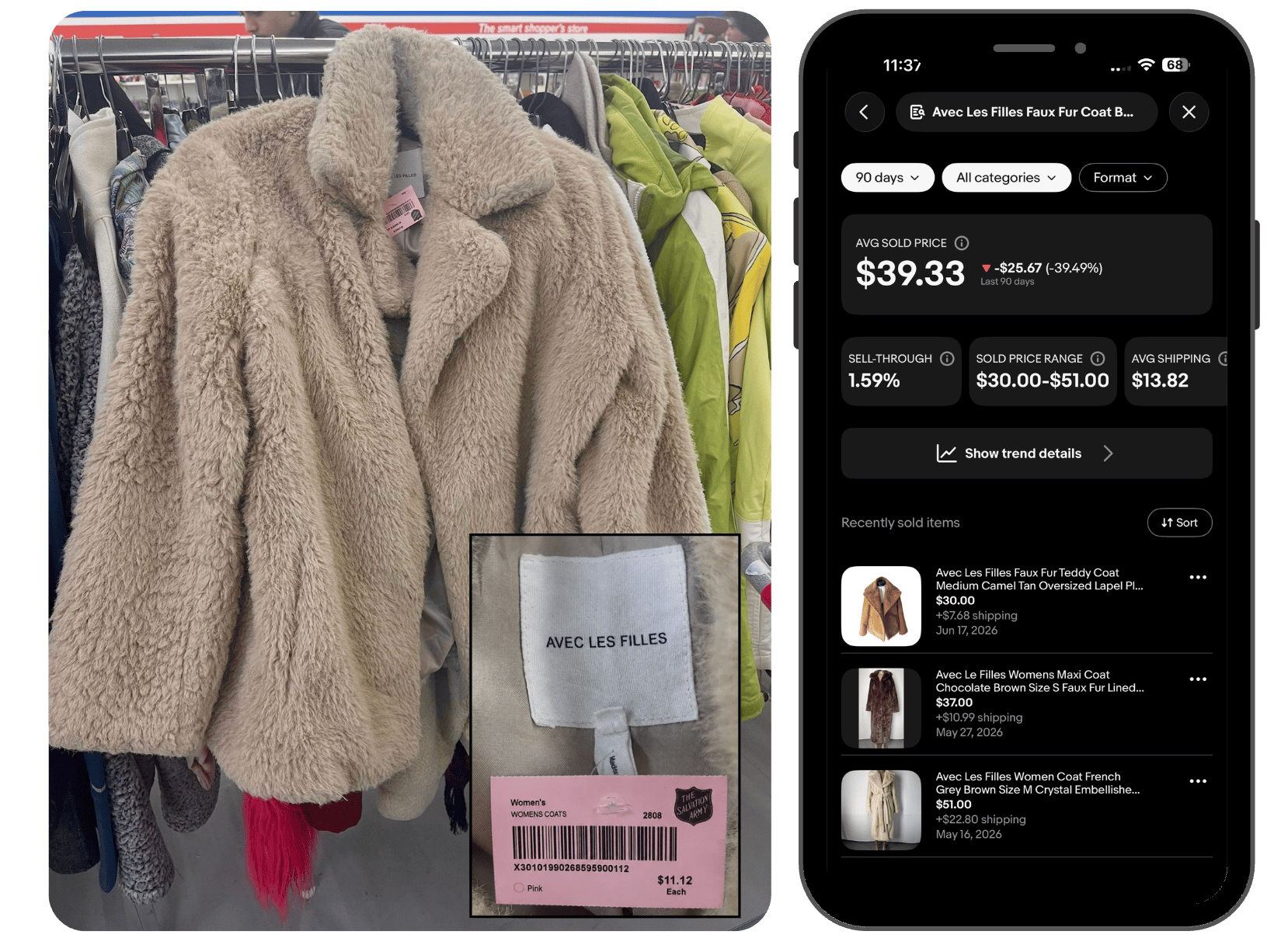
Here, a jacket that costs $18 might seem like a great find. However, if similar jackets regularly sell for only $39, your potential profit is more limited than it first appears...
After subtracting marketplace fees (approximately 10%-20%, or $3.90-$7.80) and your $11.12 cost of goods, you're left with an estimated profit of just $20-$24 before accounting for shipping supplies and other business expenses. Then consider the time required to source, inspect, clean, steam, measure, photograph, research, list, store, manage, package, and ship the item.
When all of those tasks are factored in, a $20-$24 profit may not be worth the effort. By comparison, paying $18 for an item that consistently sells for $80 provides a much healthier profit margin and a significantly better return on both your investment and your time.
The good news is that you don't have to guess how much things will sell for. Most marketplaces provide research tools that allow you to review recent sales data before making a purchase.
💡 Tip: I regularly use eBay's Product Research tool to review recent sold listings, pricing trends, and buyer demand before purchasing inventory. It has become one of the most valuable sourcing tools in my business.
As you gain experience, you'll naturally begin recognizing brands, styles, and product categories that consistently perform well. You'll also become better at spotting trends.
If you're working with a small budget, don't worry. There are plenty of ways to start building inventory without spending much money.
Be sure to check out our guide How to Source Inventory for Free or With a Low Budget.
2. Sell What People Actually Want
One of the biggest mistakes new resellers make is buying items simply because they think they're free, cheap, or interesting. While there might eventually be a buyer for almost anything, waiting months for the "right buyer" isn't a sustainable business model.
Instead, focus on products buyers are actively searching for. 🔎
The best part is that you don't have to guess what's popular. Sales data is readily available through marketplace research tools, sold listings, trend reports, and industry news. Before purchasing inventory, spend a few moments researching current demand.
When evaluating an item, ask yourself:
- Are similar items selling consistently?
- How many have sold recently?
- How quickly do they sell?
- Is the selling price high enough to justify my investment?
Following buyer demand rather than personal preference leads to faster inventory turnover and healthier cash flow.
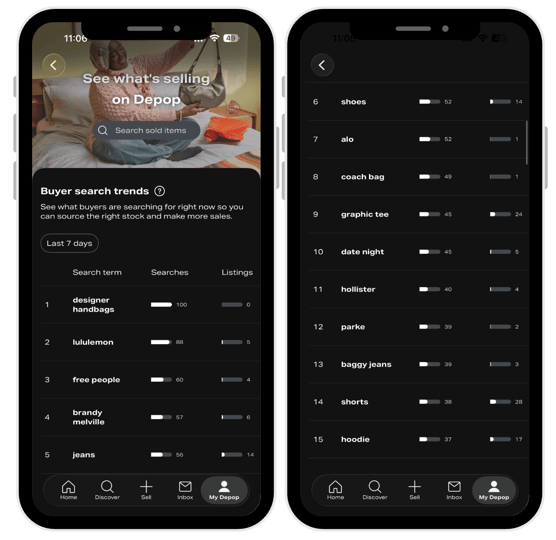 Here's an example of the Depop Sold Item Search tool, which provides sold comps and buyer search trends.
💡 Tip: As a general rule, aim to source items that are likely to sell within 90 days and have a Sell-Through Rate (STR) of at least 70%. Your STR measures how much of your inventory actually sells during a given period. For example, if you list 50 items this month, your goal should be to sell at least 35 of them. If you're not hitting that number, stop listing and figure out why. It might be because you're not selling items that people actually want.
3. Diversify Your Sourcing
If you visit the same thrift store every week and rarely find quality inventory, it may be time to expand your sourcing strategy. Successful resellers rarely rely on a single source of inventory. Instead, they continuously explore new opportunities.
Some of the best places to source inventory include:
-
Thrift Stores: Local thrift stores remain one of the most popular sourcing locations for clothing, shoes, accessories, books, and home goods.
-
Church and Charity Shops: These stores are often less expensive than commercial thrift stores and may have less competition.
-
Estate Sales: Estate sales frequently offer vintage clothing, collectibles, furniture, jewelry, and household goods.
-
Garage and Yard Sales: Seasonal garage sales can produce excellent profit margins, particularly during community-wide events.
-
Consignment Shops: Some stores regularly discount older inventory, creating resale opportunities.
-
BSTs: Buy Sell Trade Stores: Stores that purchase inventory from consumers often have desirable brands available below market value.
-
Goodwill Outlet ("The Bins"): Buying inventory by the pound can dramatically reduce your cost of goods if you're willing to invest the time.
-
Retail Arbitrage: Clearance sections at stores like Marshalls, T.J. Maxx, Ross, Burlington, and Nordstrom Rack can provide profitable opportunities for brand-new merchandise.
-
Facebook Marketplace and Local Apps: Many sellers underprice items simply because they want them gone quickly.
-
Community Outreach: Local Facebook groups, Nextdoor, Craigslist, and word of mouth can all lead to inexpensive or even free inventory.
💡Tip: Most thrift stores offer discount days and rewards programs. Be sure to learn about sale days, coupons, and rewards programs at your local thrift.
You might also be interested in the article How to Source for Free or With a Low Budget.
Quick Reference: 10 Pro Reselling Tips
| Reselling Tip | Why It Matters |
|---|---|
| Source Smart | Purchase inventory with strong profit potential. |
| Sell What People Want | Increase sell-through rates and reduce stale inventory. |
| Diversify Your Sourcing | Discover more inventory opportunities. |
| Price Competitively | Sell faster and yieldd profit. |
| Take Amazing Photographs | Increase clicks and buyer confidence. |
| Optimize Titles and Descriptions | Improve marketplace SEO and visibility. |
| Stay Active on the Marketplaces | Boost exposure through consistent activity. |
| Work Smarter, Not Harder | Save time and scale your business efficiently. |
| Crosslist Your Inventory | Reach buyers across multiple marketplaces. |
| Treat Reselling Like a Business | Build long-term profitability and organization. |
Now that you've found profitable inventory, it's time to make sure your listings stand out. Pricing, photography, and search engine optimization all play a major role in turning inventory into sales.
Don't miss out on boosting your online sales – Grab your copy of Vendoo's Ultimate Marketplace Guide for Resellers today!
4. Price Competitively
Pricing your inventory correctly is one of the most important aspects of reselling. If your item is listed well above similar listings, it probably isn't going to sell quickly. On the other hand, pricing too low may lead to a fast sale, but you'll sacrifice profit that you could have earned. The goal is to price competitively while still maximizing your return.
Research the Market
Before buying and listing an item, research comparables ("Comps"). Before buying an item, browse sold comps to see what similar items are selling for. This provides a reasonable idea of profit. Before listing, browse active comps which provide an idea of what other sellers have the item for sale for right now. This is your active competition.
Active listings show what sellers are asking, and sold listings show what buyers are actually willing to pay. Together, comps provide an accurate portrayal of a decent list price and an item's expected return on investment.
💡Tip: When running comps, pay attention to an item's condition, color, size, and included accessories. These factors can significantly affect value, even among otherwise identical products.
Leave Room for Offers
Many marketplaces encourage negotiation, so it's often a good idea to price above your ideal selling price. This allows you to send or accept offers while still reaching your target profit. I price so that I can send and accept offers up to 30% to 40% off my listing price and still yield a comfortable profit.
Just be careful not to inflate your price so much that buyers never click on your listing in the first place.
Remember the Buyer's Perspective
Most buyers aren't just paying for your item. They're also paying shipping costs and sales tax. Some marketplaces also have buyer fees. Those additional costs can quickly add up.
Think about it from the buyer's perspective. If two nearly identical listings are available, even a small price difference may influence which one gets the sale.
💡Tip: If your items are getting a lot of views but no offers, the problem might be your pricing.
5. Take Amazing Photographs

Let’s face it, looks matter. Shopping is a pyschological process, especially when it comes to clothing and dashion. Before buyers read your description, they notice your photographs.
More often than not, buyers choose the listing that looks the cleanest, brightest, and most professional. Great photographs can make the difference between someone scrolling past your listing and making a purchase.
🧠 Think about it: If someone searches for "Lululemon Align High Rise Leggings Size 6," hundreds, if not thousands, of listings may appear. Many of those listings will be priced similarly. What makes a buyer click on yours? The photos.
Lighting Is Everything
Good lighting instantly improves your listing. Natural sunlight is one of the best photography tools available, and it's completely free. Whenever possible, photograph your items in bright, indirect natural light. If that's not an option, ring lights and other artificial lighting can also produce excellent results.
Your goal is to create bright, evenly lit photographs that accurately represent the item's color and condition.
💡Tip: There are many photo editing tools to help create the perfect cover photos including PicTapGo, PhotoRoom, and Adobe Lightroom.
Present Your Items Professionally
Your inventory should look its best before the camera comes out. You are going to have a hard time selling if your pictures are dark and blurry with a wrinkled item laid on the floor. You want to show your items in their best light, literally.
Take a few extra minutes to:
- Remove wrinkles.
- Lint roll fabrics.
- Clean shoes and accessories.
- Steam garments when necessary.
- Center or evenly hang your items.
- Use a clean, plain background.
Whether you prefer hanger photos, flat lays, a dress form, or modeled images, consistency is key. Crisp, professional photographs immediately build buyer confidence.
Photograph Every Detail
Buyers can't inspect your item in person, so your photographs need to answer their questions before they're asked.
Be sure to photograph:
- Front
- Back
- Both sides
- Interior
- Brand tag
- Size tag
- Care tag
- Material content
- Special features
- Measurements
- Every flaw or imperfection
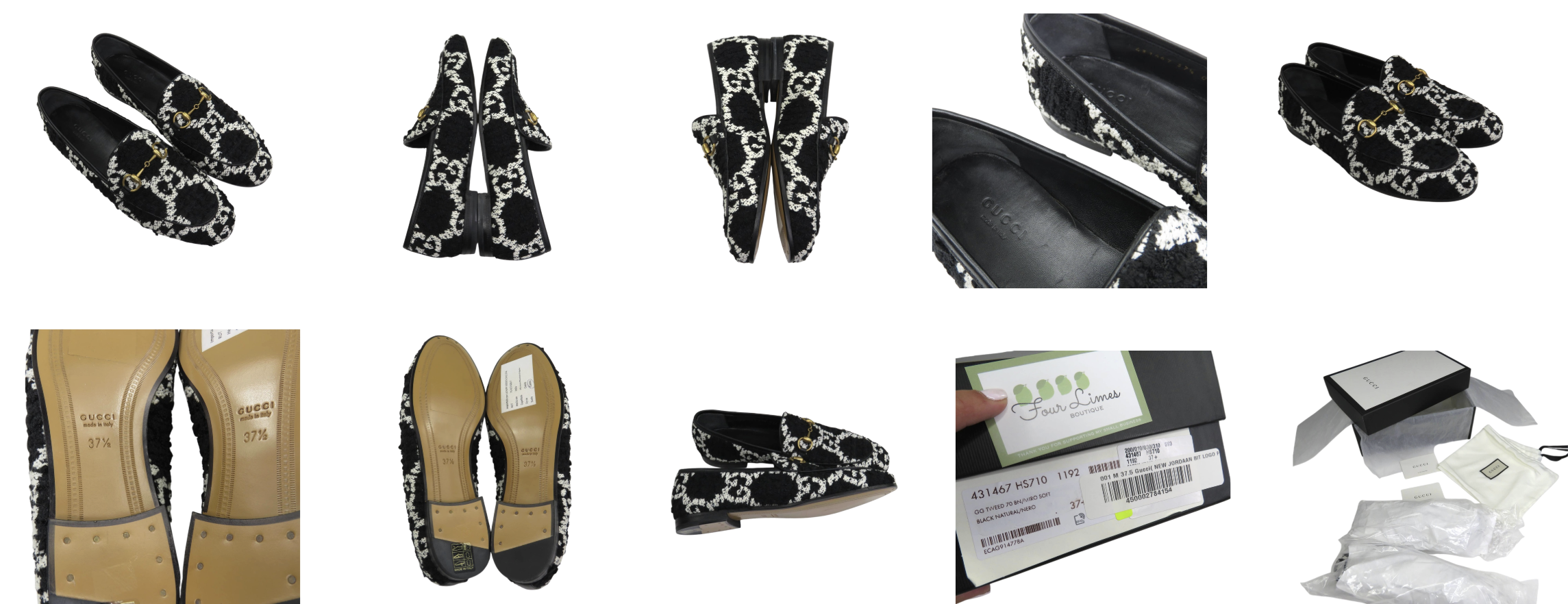
Showing everything allows buyers to shop with confidence while also protecting you if questions arise after the sale. Detailed photographs help set accurate expectations and reduce the likelihood of returns or disputes.
💡Tip: If a picture is worth a thousand words, a video is worth a million. Use listing videos so buyers can see an item's fit, movement, texture, and condition.
6. Optimize Your Titles and Descriptions for SEO
Search engine optimization (SEO) is one of the most important skills a reseller can learn. Buyers can't purchase your items if they can't find them, and most sales begin with a buyer typing keywords into a marketplace's search bar.
So, what determines whether your listing appears in the search results? Every marketplace uses its own search algorithm, but most consider a combination of the information you provide in your listing, such as the category, brand, size, color, condition, and the words you include in your title and description.
For example, imagine a buyer searches for a "black sexy mini dress." If your listing only says "Revolve black dress medium," they likely won't see your dress. It wouldn't yield in their search because didn't include the words they used in their search.
The more you describe your item, the easier it is for buyers to find it. 🔑
You should be using most all of the characters available in your title and description.
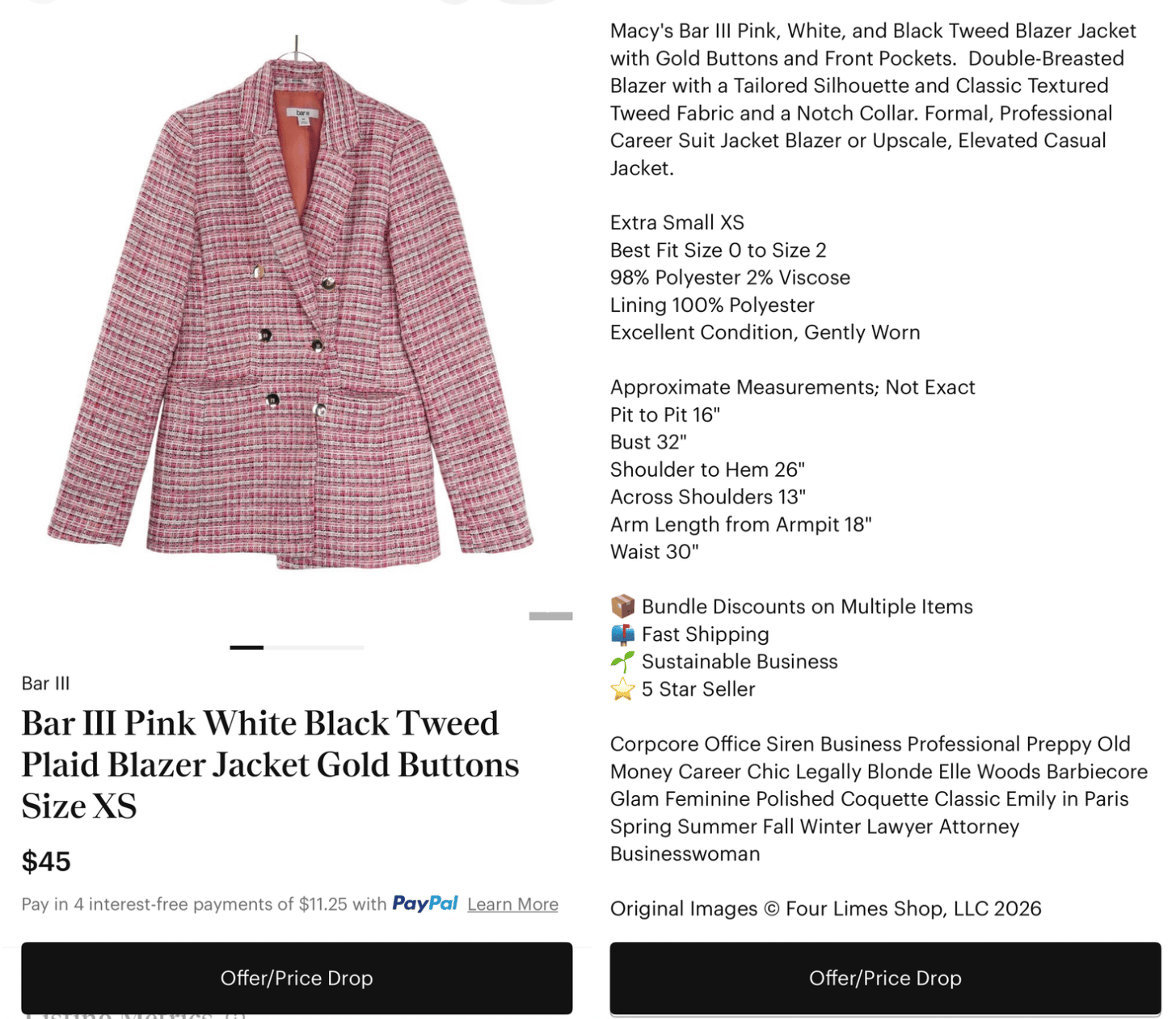
💡Tip: AI can be a helpful tool to help draft your listings, but you must review them carefully to ensure they include everything they need.
When creating your listings, include as many relevant details as possible:
✔ Brand: Include the brand name
✔ Style Name: The official title of the item from the brand. Buyers often search this way.
✔ Item Type: Instead of simply writing "pants," specify the type, such as trousers, joggers, cargo pants, chinos, or dress pants.
✔ Style: Describe the specific style, such as, for jeans, flared, skinny, wide leg. For jackets, fleece, bomber, moto, etc.
✔ Color: Include every major color(s) that accurately describes the item. Don't stop at "blue" if "navy blue" or "light wash denim" is more accurate.
✔ Pattern: Describe prints and patterns using searchable terms like floral, plaid, gingham, leopard, striped, paisley, polka dot, geometric, or houndstooth.
✔ Material: Many buyers specifically search for specific materials, especially if your item contains linen, silk, cashmere, wool, leather, cotton, or another desirable fabric.
✔ Measurements: Measurements not only help buyers determine fit, but many buyers search by waist, inseam, chest, and collar measurements.
✔ Occasion: Think about when someone would wear or use your item. Keywords like casual, formal, cocktail, office, vacation, athletic, athleisure, business casual, or wedding guest are highly searched.
✔ Keywords: Include trending style and aesthetic keywords that genuinely describe your item, such as boho, coquette, cottagecore, preppy, minimalist, western, etc.
💡Tip: Fill out every listing field available. Details like brand, color, size, material, style, and pattern help marketplaces match your item to buyer searches and filters, increasing your chances of making a sale.
Want to learn more about search engine optimization to increase visibility and sales? Check out A Reseller's Guide to SEO

7. Stay Active on the Marketplaces
You can't simply list it and leave it. Successful reselling requires consistent activity.
Marketplace algorithms generally reward active sellers because consistent activity often leads to better buyer engagement. While every marketplace is different, staying active helps keep your inventory visible and increases opportunities for sales.
At a minimum, try to complete these tasks every day:
- List new inventory.
- Send offers to likers (both new likers and across all items weekly)
- Respond quickly to offers and questions.
- Promote your listings using each marketplace's available tools.
- Refresh or relist older inventory that has gone stale.
The exact activities vary depending on the platform. On Poshmark, sharing listings is an important part of maintaining visibility. On Depop, refreshing listings can help increase exposure. Grailed sellers often bump listings to move them back toward the top of search results. Learn how each marketplace works and make those activities part of your daily routine.
Consistency matters more than perfection.
Think of reselling like working out. Going to the gym once won't get you into shape, just like listing twenty items one day and disappearing for two weeks won't consistently grow your business. Small, consistent actions performed every day produce the best long-term results.
Creating a realistic daily workflow makes it much easier to stay motivated and continue growing your business.
Vendoo offers automated offers to likers, sharing, refereshing, relisting, and more. Sign up for Vendoo for FREE today!
8. Work Smarter, Not Harder
Time is money. In fact, it's even more valuable because once it's gone, you can't get it back. One of the biggest differences between hobby sellers and high-volume resellers isn't how hard they work, it's how efficiently they work. Creating systems and workflows allows you to list more inventory, spend less time on repetitive tasks, and focus on activities that actually grow your business.
Here are some of the best ways to work smarter:
- Track Your Time: Pay attention to how you're spending your day. You may discover that certain tasks are taking much longer than you realized or that some items simply aren't worth the time required to source, photograph, list, and ship. Tracking your time helps identify bottlenecks and improve productivity.
- Batch Tasks: Instead of cleaning, photographing, measuring, researching, and listing one item at a time, complete each task in batches. For example, steam ten items at once, photograph them all, then measure them all before sitting down to write your listings. Working in batches reduces distractions and saves an incredible amount of time.
- Create Workflows: Establish a repeatable process for every item that enters your business. Having a consistent workflow, from sourcing and inventorying to photographing, listing, storing, and shipping, reduces mistakes and keeps your business running smoothly.
- Use Templates: Create listing templates for common product categories and save frequently used phrases for condition descriptions, measurements, shipping policies, and seller notes. Starting with a template is much faster than writing every listing from scratch.
- Organize Inventory: Develop an inventory system that allows you to locate sold items quickly. Numbered bins, shelves, storage totes, or racks can dramatically reduce the time spent searching for inventory after a sale.
- Prepare Ahead: Keep a backlog of photographed inventory and saved drafts. On busy days, you can simply finish and publish listings instead of starting the entire process from scratch.
- Automate: Let software like Vendoo handle repetitive tasks whenever possible. Automation tools can crosslist inventory, delist sold items, relist stale listings, send offers, and perform other repetitive tasks in minutes instead of hours. The less time you spend on manual work, the more time you have to source inventory, improve your listings, and grow your business.
One of the biggest time-saving tools available to resellers is Vendoo. Instead of manually creating listings across multiple marketplaces or relisting inventory one platform at a time, Vendoo allows you to crosslist, delist sold items, relist stale inventory, manage inventory, and automate repetitive tasks from one centralized dashboard. Saving just a few minutes on every listing can translate into dozens of hours over the course of a year.

💡Tip: Don't just look for ways to save time. Look for ways to eliminate unnecessary work altogether. Every task you automate or streamline gives you more time to focus on sourcing great inventory, creating better listings, and increasing your sales.
9. Crosslist Your Inventory
If you're only listing your inventory on one or two marketplaces, you're seriously limiting your potential sales. Every marketplace attracts a different audience, and many buyers are loyal to a single platform.
🧠 Think about it: Some Depop shoppers don't even have the eBay app, and vice versa.
The more places your inventory appears, the more opportunities you create for buyers to find it. Crosslisting allows you to reach millions of additional shoppers without purchasing more inventory. Instead of relying on one marketplace to generate sales, you diversify your business across multiple platforms, reducing risk and increasing exposure.
Some of the biggest benefits of crosslisting include:
- Exposure: Every marketplace has its own customer base. Listing on multiple platforms allows more buyers to discover your inventory.
- Sales: More visibility generally leads to more opportunities to sell, increasing your overall sell-through rate.
- Protection: If sales slow down on one marketplace due to algorithm changes or seasonal trends, your inventory is still available for purchase elsewhere.
- Profit: Different marketplaces attract different buyers. In some cases, the exact same item may command a higher selling price on one platform than another.
- Growth: Crosslisting allows you to scale your business without continually sourcing more inventory. The same item can work for you across multiple marketplaces simultaneously.
Of course, manually creating the same listing over and over again can quickly become overwhelming, especially as your inventory grows. That's why many professional resellers use crosslisting software like Vendoo to publish listings across multiple marketplaces from one central location and automatically remove sold items to help prevent overselling.
💡 Tip: Don't assume every item belongs on every marketplace. Some, like Poshmark, eBay, Depop, and Mercari are perfect for all types of fashion. Others, like Etsy, Grailed, and Vestiaire Collective are more niche to specific types of items. Learn the matketplaces.
Want to learn more about reselling? Check out Vendoo’s Ultimate Reseller Handbook, a free eBook to teach you how to make six figure sales!
10. Treat Reselling Like a Business
Reselling may start as a hobby, but if your goal is to make consistent money, it's important to treat it like a business. Hobbies are for fun. Businesses are built for profit. Fortunately, reselling can be both.
The most successful resellers don't just focus on finding great inventory. They also stay organized, track their finances, plan for taxes, and create systems that allow their businesses to grow.
Here are a few business habits every reseller should develop:
- Budget: Know how much you're spending on inventory, supplies, software, shipping materials, and other business expenses. A budget helps you make informed purchasing decisions and avoid overspending.
- Bookkeeping: Keep accurate records of your income and expenses throughout the year. Waiting until tax season to organize receipts and transactions can create unnecessary stress and increase the chance of overlooking valuable deductions.
- Taxes: In many cases, marketplaces report your sales to the IRS by issuing a Form 1099-K once applicable reporting requirements are met. While your tax situation depends on many factors, you'll generally want to keep records of your inventory costs, marketplace fees, shipping expenses, supplies, mileage, software subscriptions, and other legitimate business expenses. Consult a qualified tax professional to determine which deductions apply to your business and what records you should maintain throughout the year.
- Organization: Develop systems for storing inventory, supplies, shipping materials, and business records. Staying organized saves time, reduces mistakes, and makes your daily workflow much more efficient.
- Goals: Set realistic goals for your business, whether that's increasing monthly sales, listing more inventory, improving your average selling price, or growing your profit. Tracking your progress helps keep you motivated and accountable.
- Consistency: Successful businesses are built through consistent effort. Showing up every day, even if it's only for an hour, often produces better long-term results than occasional bursts of productivity.
As your business grows, you'll discover that success isn't just about selling more items. It's about creating efficient systems that allow you to source smarter, list faster, stay organized, and make better business decisions.
💡 Tip: Read the book Profit First by Mike Michalowicz! This book will change your mindset through easy principles to change the way you thin kand simply business finances.
Reselling Tips That Will Help You Sell More
There isn't one secret to becoming a successful reseller. The most profitable resellers consistently apply good habits over time. They research inventory before buying it, create listings that buyers can actually find, take high-quality photographs, stay active on their marketplaces, work efficiently, and treat reselling like the business it is.
Start by implementing one or two of these reselling tips, then gradually build better systems as your business grows. Small improvements made consistently can lead to significant results over time.
If you're ready to save time, simplify your workflow, and grow your resale business, tools like Vendoo can help you crosslist inventory, automate repetitive tasks, and manage your business more efficiently so you can spend more time sourcing, listing, and making sales.
What are some of your best reselling tips and tricks? Tell us below! 👇🏽